Skip to content

GrowthFactor Knowledge Base

Simple Trade Area Analysis for Confident Site Selection

February 202625 min read3 chapters

Introduction

This guide covers the core concepts, platform features, and deal management workflows that power confident retail site selection. Whether you're evaluating your first location or managing a national portfolio, you'll find the analytical frameworks and practical tools you need.

Who this is for

  • Expansion managers evaluating new markets
  • Real estate directors managing multi-unit portfolios
  • Franchise development teams scaling nationally
  • C-suite executives making capital allocation decisions
  • Site selection analysts building defensible recommendations

Chapter 01

General Real Estate Analysis Terms

Trade Zone

A trade zone (also known as a trade area) is the geographic area from which a retail site draws its customers. Defining this zone accurately is the foundation of site selection. It allows you to analyze key factors like the resident population, demographics, daytime population, potential demand, and competitive landscape.

The method you choose to define a trade zone is critical, as it directly impacts the quality of your analysis. A simple 1-mile circle might be easy to draw, but it fails to capture how people actually travel. Modern methods focus on the real-world factors that influence a customer's journey to a store.

Drive-Time Isochrones

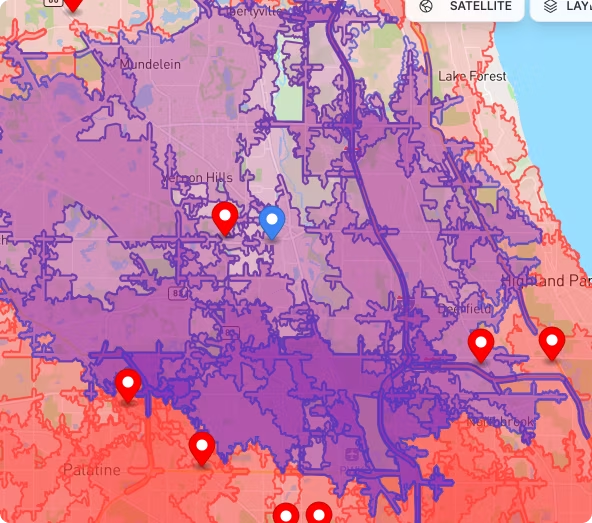
An isochrone is a line on a map connecting points of equal travel time from a central location. A drive-time isochrone creates a polygon that represents how far a vehicle can travel from a potential site in a given amount of time (e.g., 5, 10, and 15-minute drives).

Fig. 01
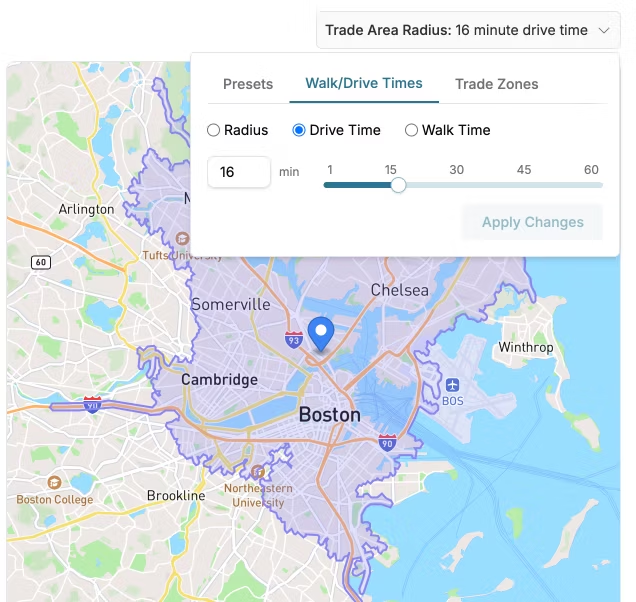
Map showing a drive-time isochrone polygon radiating from a central retail site, covering the area reachable in 16 minutes by car
A trade zone using a 16-minute drive time radius

This method recognizes a fundamental truth of modern travel: people think in terms of time, not distance. A 3-mile drive can take 5 minutes on a highway but 20 minutes in congested city traffic. Drive-time analysis accounts for the actual road network, speed limits, turn restrictions, and typical traffic patterns.

When to use it:

  • Suburban and Rural Locations: This is an effective method for areas where the automobile is the primary mode of transportation.
  • Big-Box Retail, Grocery Stores, and Shopping Centers: For any destination that customers are expected to drive to, this provides the most realistic picture of the potential customer base.
  • Logistics and "Last-Mile" Delivery: Essential for calculating delivery zones and ensuring service level agreements (SLAs) can be met.

Walk-Time Isochrones

Similar to drive-time, a walk-time isochrone maps out how far a person can travel from a site by walking in a set amount of time (e.g., 5, 10, and 15-minute walks). This model accounts for the actual pedestrian network: sidewalks, crosswalks, pedestrian bridges, and parks, while respecting barriers like highways, rivers, and buildings.

Fig. 02
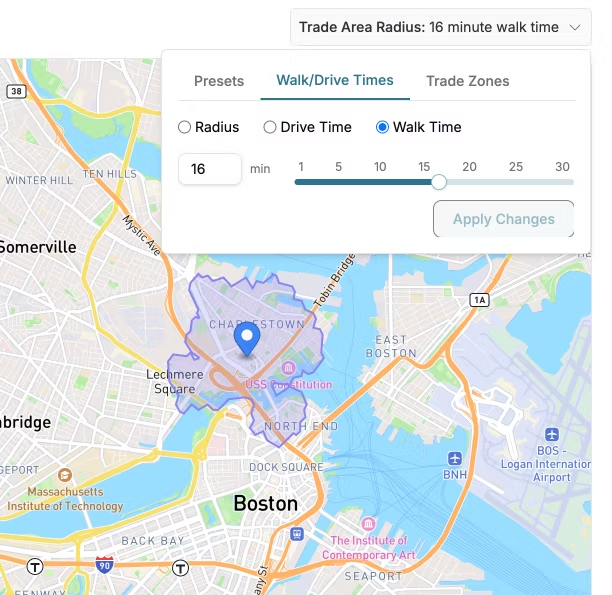
Map showing a walk-time isochrone polygon radiating from a central retail site, covering the area reachable in 16 minutes on foot
A trade zone using a 16-minute walk time radius

When to use it:

  • Dense Urban Environments: Essential for cities like New York, Boston, or Chicago, where pedestrian activity is high.
  • Central Business Districts (CBDs): Perfect for analyzing sites for coffee shops, fast-casual lunch restaurants, or convenience stores that rely on foot traffic from nearby office workers and residents.
  • Transit-Oriented Developments (TODs): Ideal for understanding the walkable area around a train station or major bus stop.

Customer Origination (Foot Traffic) Data

This method is the "ground truth" of customer behavior. It shows you the actual trade area based on where past visitors came from. This is typically sourced from anonymized and aggregated mobile device location data. By analyzing a site (or a competitor's site), you can generate a set of boundaries that contain the home or work locations of a certain percentage (e.g., 75% or 90%) of its observed visitors.

Fig. 03
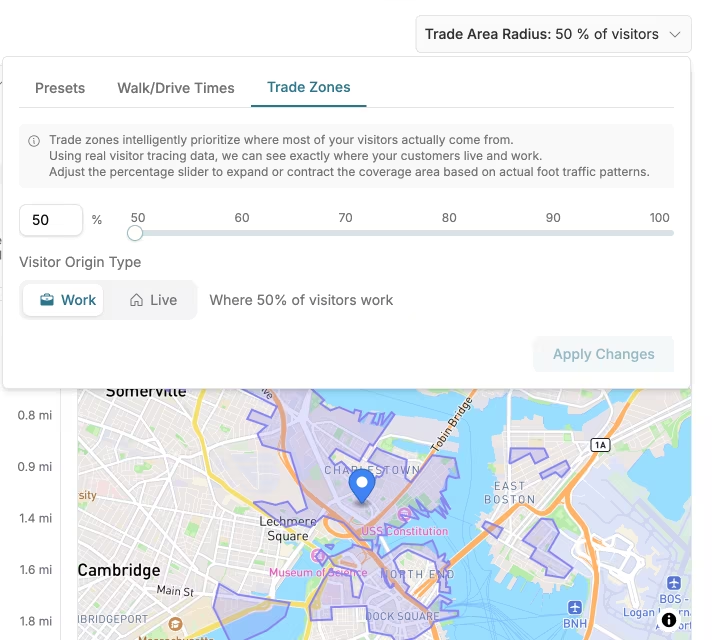
Map showing a customer origination trade area derived from foot traffic data, with boundaries indicating where 75% of visitors originate
A trade zone using customer origin (work) foot traffic data

This approach inherently accounts for all modes of travel — walking, driving, and public transit — because it shows the final result of a customer's decision to visit.

When to use it:

  • Analyzing Existing Stores: Perfect for understanding the performance of your own stores. Is a store underperforming because its trade area is smaller than expected?
  • Competitive Analysis: Define a competitor's trade zone to understand their customer base, identify market gaps, and strategize on how to win market share.
  • Validating Other Models: Use customer origination data to confirm or challenge the assumptions of a drive-time or walk-time model.

Competitors & Compliments

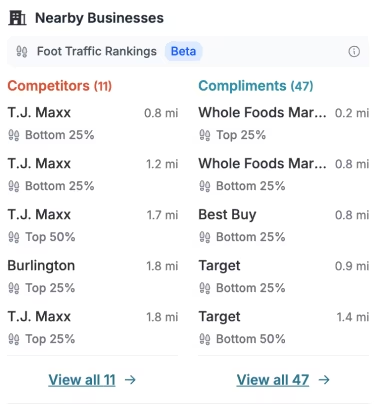
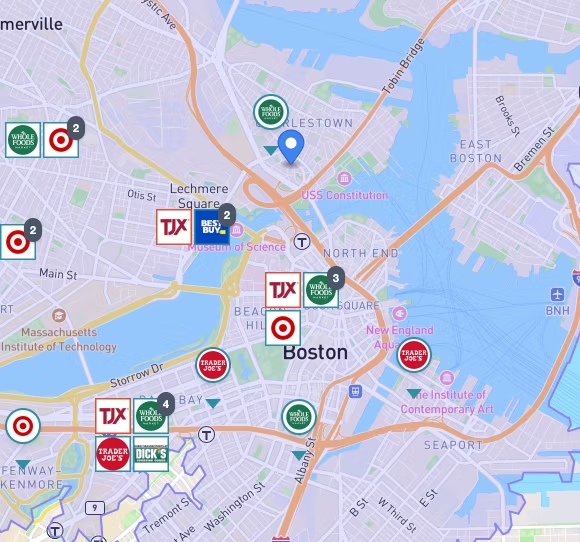
Once a trade zone is established, the next critical step is analyzing the existing retail landscape within that area. This analysis provides context for performance projections and strategic positioning by evaluating both competitive threats and synergistic opportunities.

Fig. 04
Platform side panel showing a list of competitor businesses with distance and category information within the defined trade zone
Side panel lists competitor and complementary businesses within the trade zone

Fig. 05

Map view with competitor and complementary business pins plotted within the trade zone boundary
Map view showing competitor and complementary business locations

Competitor Analysis

A competitor's presence is a source of critical market intelligence, not just another point on the map. The goal is to understand market saturation and identify strategic advantages.

  • Mapping and Segmentation: Identify all direct and indirect competitors within the trade zone. Use foot traffic data to analyze their actual trade areas and performance, which can reveal underserved pockets or areas of intense competition.
  • Cannibalization Risk: For chains, modeling the trade zone overlap between a proposed site and existing locations is essential to forecast potential sales transfer (cannibalization) and ensure net growth for the brand.
  • Performance Benchmarking: A competitor's performance within the same trade zone serves as a real-world benchmark for the market's potential, helping to validate sales forecasts.

Leveraging Complementary Businesses

Complementary businesses attract a similar customer demographic without directly competing, creating a symbiotic relationship that can significantly boost traffic and sales.

Fig. 06
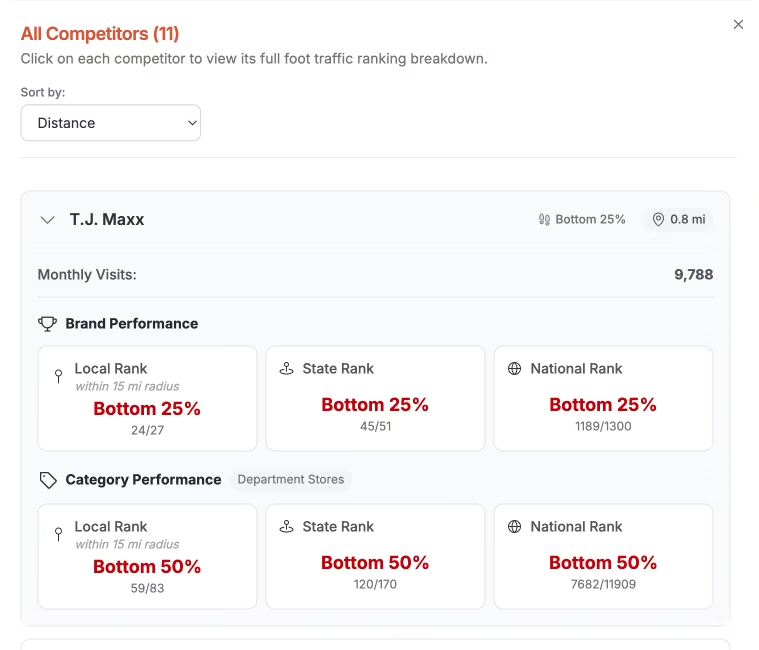
Side panel showing detailed competitor information including category, address, and foot traffic metrics
Detailed competitor view with category and foot traffic data

Fig. 07

Map showing complementary business locations with category badges within the trade zone
Complementary business locations mapped within the trade zone
  • Identifying Traffic Generators: Locate anchor tenants and high-frequency destinations (e.g., grocery stores, gyms, cinemas) that act as major traffic drivers. Proximity to these businesses can capture significant ancillary visits.
  • Trip Chaining: Consumers often group errands into a single outing. Positioning a site near businesses that fit into a customer's typical routine increases visibility and convenience.
  • Demographic Alignment: The strength of a co-tenant lies in its customer profile. Strong synergy exists when neighboring businesses appeal to the same target demographic, creating a compelling destination for that consumer group.

Analog-Based Sales Forecasting

Analog-based sales forecasting is a foundational methodology for projecting the performance of a proposed retail site by leveraging the performance of existing, comparable stores. The core principle is that a new site will perform similarly to existing stores that share its most critical trade area and site-specific characteristics.

Fig. 08
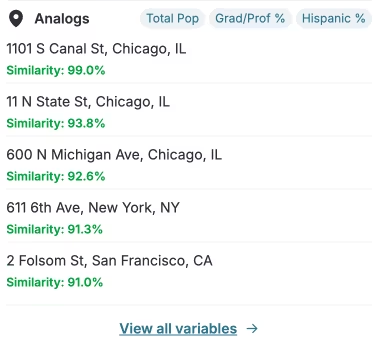
Side panel displaying the total projected annual sales estimate derived from analog store performance
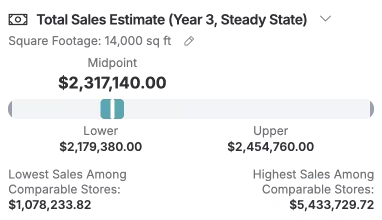
Total sales estimate for the searched location, determined from analogs

Fig. 09

Side panel showing the projected sales per square foot metric derived from analog store comparisons
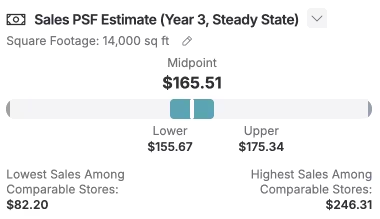
Sales per square foot estimate, determined from analogs

Fig. 10

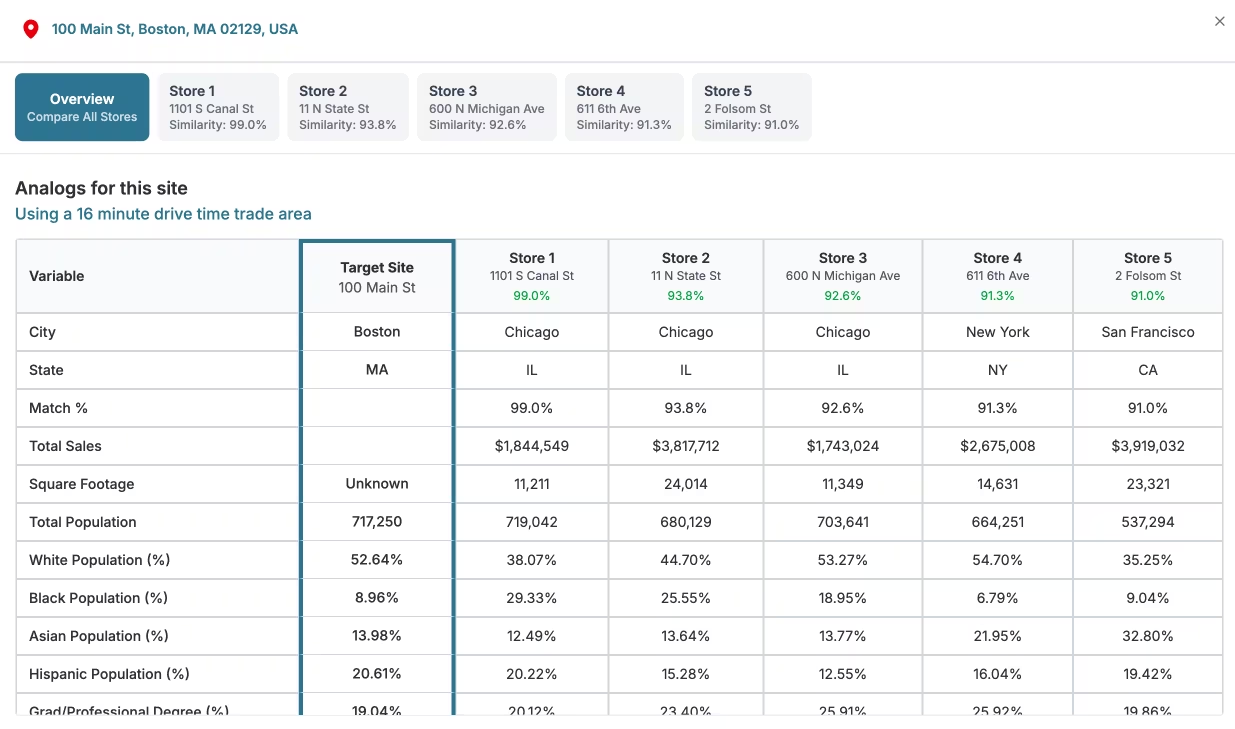
Comparison table showing how analog stores match the searched location across key revenue-driving variables
Analogs show similarity between existing stores and the searched location using top revenue-driving variables

Fig. 11

Expanded panel view showing full analog store details including individual store performance metrics and similarity scores
Expanded analog view with detailed store comparisons

The process involves:

  • Profiling the Proposed Site: A comprehensive profile of the potential new location is created, including trade zone demographics, competitive landscape, visibility, access, and co-tenancy.
  • Identifying Analogs: The entire portfolio of existing stores is queried to find the locations that most closely match the proposed site's profile. These selected stores are the "analogs."
  • Weighted Performance Analysis: The sales performance of analogous stores forms the basis of the forecast. A sophisticated model assigns a weight to each based on its degree of similarity. The closest analogs receive the highest weighting.

By calculating a weighted average of the analogs' performance, the model generates a reliable, data-driven sales forecast for the new location. The strength of this methodology lies in its empirical foundation — it is grounded in the actual, real-world performance of your own stores in similar environments, making it one of the most trusted approaches in site selection.

Sales Cannibalization

Sales cannibalization is a critical consideration in network expansion strategy. It occurs when a newly opened store captures sales from a nearby existing store owned by the same company, rather than generating purely incremental revenue.

Fig. 12
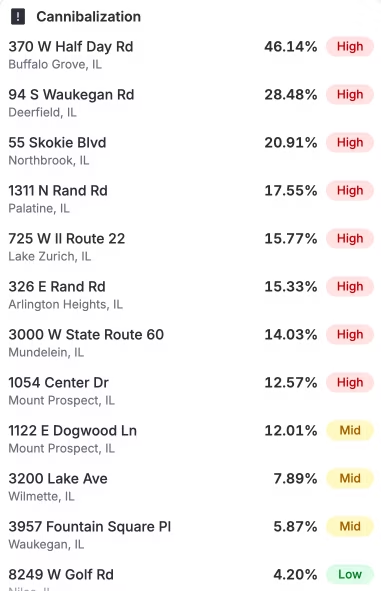
Side panel showing predicted cannibalization percentages and sales transfer between existing and proposed locations
Side panel view of cannibalization effects

Fig. 13

Map showing overlapping trade zones between a proposed site (blue marker) and existing stores (red markers) with cannibalization heat overlay
Map view with cannibalization layer showing trade zone overlap

The primary driver of cannibalization is the degree of trade zone overlap. When a new site's trade area significantly intersects with an existing store's, customers who previously patronized the older location may shift their business to the new one due to convenience, novelty, or proximity.

While some level of cannibalization is often unavoidable and can be strategically acceptable to defend a market or block a competitor, excessive overlap can be detrimental. A successful site selection model must accurately forecast the potential sales transfer to ensure that the new location will contribute positive net sales to the company's overall portfolio, rather than simply redistributing existing revenue.
Chapter 02

Features

Saturation Analysis

Saturation Analysis quantifies the total market saturation within a potential site's trade area. It works by defining the trade zones for the proposed site and all relevant surrounding stores, including both external competitors and your own existing locations. We then calculate the percentage of the proposed site's trade zone that geographically overlaps with these other stores, providing a clear score for total market saturation.

This analysis provides a complete picture of market dynamics, enabling you to:

  • Quantify Market Crowding: Instead of a subjective assessment, you get a clear metric (e.g., "45% total saturation") to directly compare the competitive landscape of multiple potential sites.
  • Manage Cannibalization Risk: By including your own stores, the analysis immediately flags potential sales transfer. It helps determine if a new site fills a genuine market gap or if it will primarily draw sales from an existing location.
  • Identify "White Space": A low saturation score immediately highlights an underserved market, signaling a prime opportunity to enter with less initial resistance.
  • Validate Market Viability: High saturation can indicate a proven, high-demand market. This data provides the context needed to decide if entering a crowded market is a strategic move.
  • Inform Strategy: The total saturation level directly influences business strategy. A site in a highly saturated area may require a more aggressive marketing launch or a differentiated service offering.

Vehicles per Day Traffic

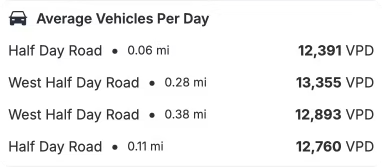
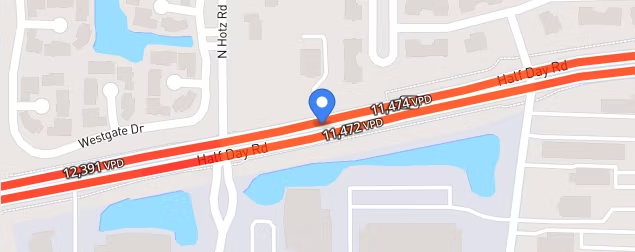
Traffic Analysis provides critical visibility into the volume of vehicular traffic on the roads surrounding a potential site. Our platform visualizes traffic directly on the map, allowing analysts to instantly identify major arteries, commuter routes, and quieter local streets.

Fig. 14

Side panel displaying average vehicles per day counts for roads surrounding the selected site location
Side panel view of average vehicles per day

Fig. 15

Map view with traffic volume visualization layer showing color-coded road segments by vehicles per day
Map view with local traffic layer turned on

This data provides a clear picture of the traffic flow in the immediate vicinity of a site, enabling you to:

  • Gauge Visibility and Exposure: High traffic counts are a direct proxy for brand exposure. For retailers that rely on drive-by customers and high visibility, such as QSR or convenience stores, this data is fundamental to estimating potential customer flow.
  • Assess Site Accessibility: Traffic data helps evaluate the ease of ingress and egress. A site's proximity to a high-traffic highway is valuable, but understanding the volume on immediate access roads is crucial.
  • Contextualize the Trade Area: Traffic patterns add crucial context to demographic data. A site on a major morning commuter route has a different customer profile and peak hours than one situated in a weekend shopping district.
  • Benchmark Opportunities: When comparing multiple sites, VPD serves as a powerful, objective benchmark. It allows you to quickly qualify or disqualify locations based on traffic thresholds.

Demographics

Demographic Analysis reveals the specific character of the population within any defined trade zone. Our platform instantly aggregates and displays key data points for the area, including population, household income, age distribution, daytime population, and consumer spending patterns, providing a detailed socioeconomic snapshot of the potential customer base.

Fig. 16

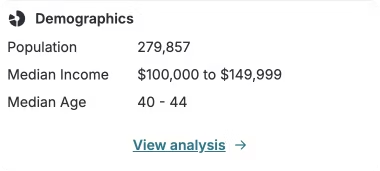
Side panel showing quick demographic summary including population, median income, and household count for the selected trade zone
Side panel view of quick demographics

Fig. 17

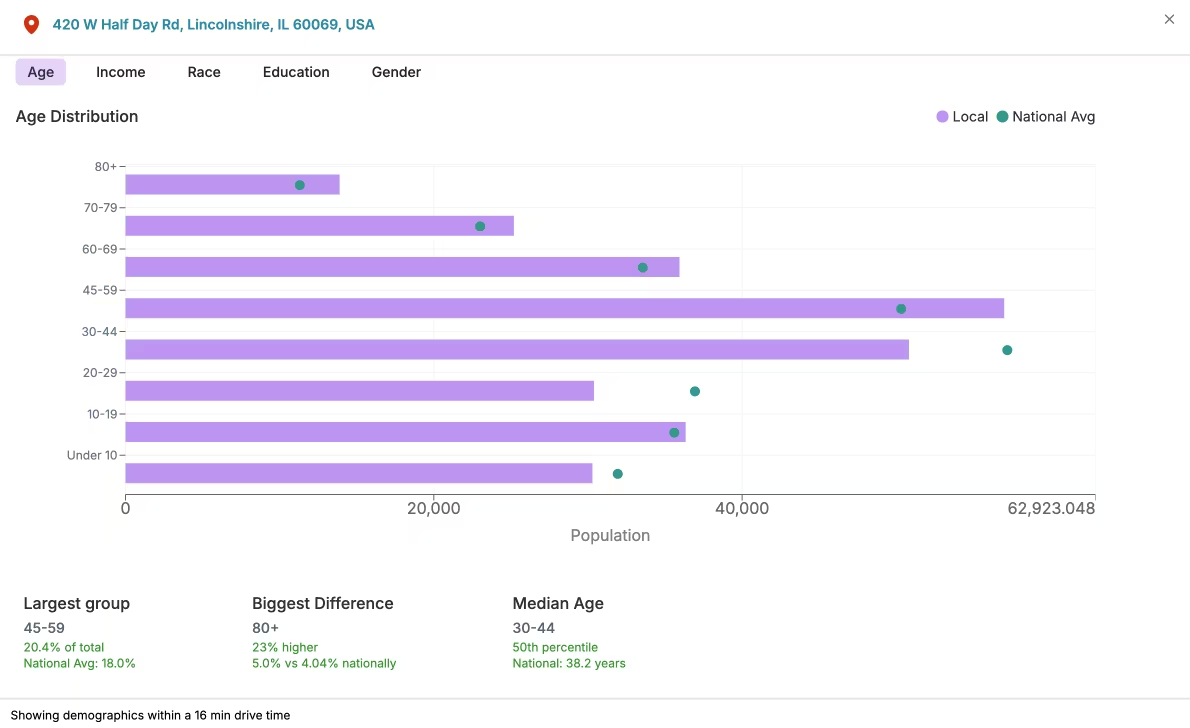
Expanded demographic panel with detailed breakdowns of age distribution, income brackets, education levels, and gender composition
Demographics expanded to show the trade zone's age, income, race, education, and gender breakdown

This rich layer of data is crucial for site selection, enabling you to:

  • Align with Your Target Customer: This is the fundamental test of market-to-brand fit. You can instantly validate whether the population in the trade zone matches your ideal customer profile.
  • Forecast Sales and Demand: Demographic data, particularly population density, income levels, and consumer spending habits, are critical inputs for sales forecasting.
  • Optimize Merchandising and Operations: The demographic makeup informs more than just the site decision; it helps tailor product assortment, store hours, and staffing.
  • Sharpen Marketing and Outreach: By understanding who is in your trade zone, you can develop highly targeted pre-opening and ongoing marketing campaigns.

Store Rankings

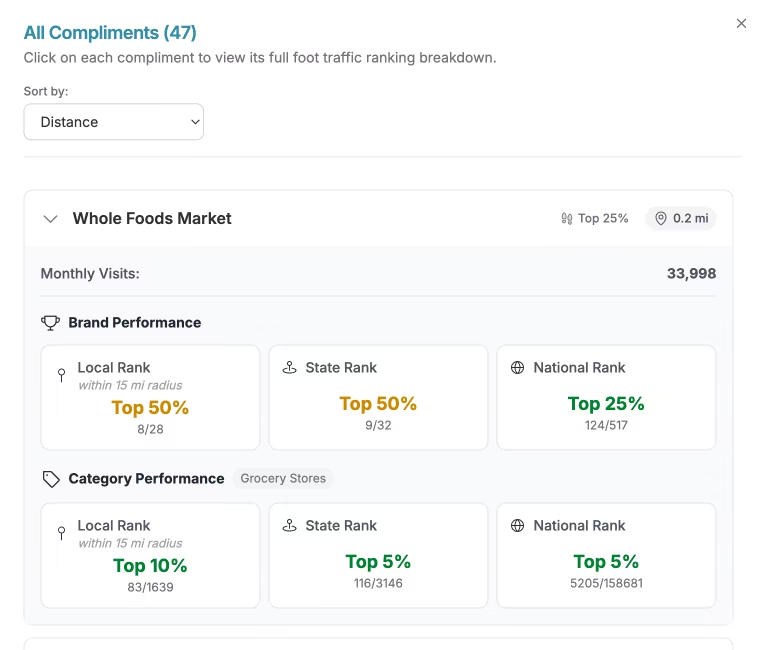
Store Performance Rankings provide an objective, data-driven hierarchy of retail locations based on observed visitor traffic. Using foot traffic data as a powerful proxy for performance, this feature ranks stores within a specific brand or across an entire retail category. These rankings can be instantly generated at the national, state, and local levels, offering a multi-scaled view of performance.

This comparative intelligence is vital for strategic site selection, enabling you to:

  • Benchmark Performance: Quickly understand what "good" looks like in any market. By analyzing the traffic of top-quartile stores, you can set realistic and data-backed performance goals for new locations.
  • Identify High-Performing Analogs: Refine your sales forecasting by identifying not just similar, but top-performing, analogous stores. Analyzing the site characteristics of the best-in-class locations provides a blueprint.
  • Analyze Market-Level Brand Strength: Compare the performance of a brand or category across different geographies. This reveals regional market dynamics, highlighting areas where a brand is dominant.
  • De-Risk Real Estate Decisions: When evaluating a specific property or shopping center, you can instantly assess the performance rank of existing tenants. A location surrounded by high-ranking stores indicates a premier retail destination.

Chapter 03

Deal Management

From Analysis to Close: An Integrated Deal Management Pipeline

The lifecycle of a retail site extends far beyond the initial analysis. The transition from a data-backed recommendation to a closed deal is a complex, multi-stage process that is often fragmented across spreadsheets, email, and disconnected files, creating significant inefficiencies and risk.

An integrated deal management system centralizes this entire workflow, bridging the critical gap between analytics and real estate execution.

The Centralized Workflow

The core of the system is a visual, Kanban-style deal board that provides a single source of truth for the entire real estate pipeline. The process is designed for seamless continuity:

  • Initiating the Deal: When a site identified through trade zone analysis and sales forecasting is deemed promising, it is instantly converted from an analytical report into a live deal card on the pipeline board. This eliminates manual data entry and ensures that all foundational analysis is permanently linked to the deal.
  • Visual Stage Tracking: The deal progresses through customizable stages — from "Initial Review" and "Letter of Intent (LOI)" to "Lease Negotiation" and "Closed" — with a simple drag-and-drop interface providing immediate visibility.
  • The Unified Command Center: Each deal card serves as a central repository for all related information, including the original site analysis, key documents (LOIs, lease drafts, site plans), critical dates, and a running log of all stakeholder comments and decisions.

Benefits of a Centralized Platform

Centralizing the deal pipeline on a single platform delivers clear strategic advantages:

  • Complete Transparency: Provides a real-time, holistic view of the pipeline, eliminating information silos and ensuring that all team members are working with the same up-to-date information.
  • Enhanced Accountability: With clear ownership and visible statuses, deals are less likely to stall. The system ensures that critical tasks and follow-ups are not lost in an email inbox.
  • Improved Efficiency: By consolidating communication, documentation, and tracking, the platform drastically reduces the administrative burden of managing the pipeline.
  • Data Continuity: The direct link between the deal card and the initial site analytics ensures that negotiations and decisions remain grounded in the data that made the site attractive in the first place.

Ultimately, this integrated approach transforms a disjointed process into a streamlined, transparent, and efficient workflow, enabling teams to close the right deals faster.

Other services hide behind black-box models that are hard to trust. The beauty of GrowthFactor is they make site selection for us incredibly simple, and give us clear unbiased recommendations on the data when we need it.

Mike CavenderCo-Owner & Head of Real Estate, Cavender's Western Wear

Ready to See the Platform?

Request Your Demo

Schedule a meeting or submit your information below and we'll be in touch to schedule.

Schedule a Call

Get in Touch

See how GrowthFactor can accelerate your expansion strategy.