
Pop-Up Real Estate: Costs, Leases & Location Strategy
Why Pop-Up Real Estate is Reshaping Retail Strategy

Pop up real estate refers to temporary retail spaces with short-term leases, typically lasting from a single day to one year, used by brands to test markets, launch products, or create experiential marketing moments. Here's what you need to know:
For Brands:
- Test new markets with minimal risk
- Build brand awareness (66% of retailers cite this as their top reason)
- Create urgency and FOMO with limited-time experiences
- 80% of retailers report their pop-ups were successful
For Property Owners:
- Generate income from vacant spaces
- Higher price-per-square-foot than traditional leases
- 1 in 5 pop-up tenants convert to long-term leases
- Combat vacancy issues (National retail vacancy rates reached a 20-year low in 2024, creating opportunities for landlords to maximize revenue from flexible spaces).
Market Size:
- Global pop-up retail market: $80-95 billion
- Industry growing rapidly since the mid-2010s
The retail world has changed. Where traditional stores once locked brands into 10-year leases and million-dollar buildouts, pop-up real estate offers a different path: test first, commit later.
The numbers tell the story. The global pop-up retail market sits between $80 and 95 billion. In one survey, 80% of retailers who ran a pop-up called it successful. More than half planned to do it again. Compare that to the old model of signing a 10-year lease and hoping for the best.
This isn't just about filling empty storefronts (though it helps—national retail vacancy rates reached a 20-year low in 2024, making every square foot valuable). It's about brands moving faster and landlords staying flexible. An online eyewear company can test physical retail for three months instead of betting everything on a permanent store. A mall can fill a vacant anchor space with rotating tenants while they search for a long-term deal.
The concept works for both sides. Brands get to experiment. Landlords get revenue from spaces that would otherwise sit empty. And increasingly, these temporary experiments become permanent: one in five pop-up tenants end up signing long-term leases.
But success isn't automatic. You still need the right location, the right legal structure, and the right data to make smart decisions. That's where the retail real estate process has evolved—from gut instinct and fragmented spreadsheets to integrated platforms that show you why a location works, not just that it might work.
I'm Clyde Christian Anderson, Founder and CEO of GrowthFactor.ai, and I've evaluated pop up real estate opportunities from both sides—first as a teenager working in my family's retail business, then as an investment banker analyzing retail deals, and now building tools that help retailers make location decisions faster. The inefficiency in this process is what drove me to build GrowthFactor: one platform that consolidates the data you need to evaluate any retail opportunity, temporary or permanent.

Why are Brands Flocking to Pop-Up Real Estate?
Brands are increasingly embracing pop up real estate due to its inherent low-risk, high-impact nature, providing unparalleled opportunities for market testing, brand awareness, and direct customer connection. In a dynamic retail landscape, pop-ups offer agility that traditional brick-and-mortar stores cannot match. This strategic flexibility allows brands to adapt quickly to consumer trends and market demands without the significant financial and long-term commitments of a permanent lease.
For us, pop-ups are a strategic playground. We can introduce new products, gauge consumer interest, or simply create buzz around our brand in a specific location for a limited time. This temporary nature fosters a sense of urgency and exclusivity, driving foot traffic and engagement.
Test New Markets and Products
Pop-ups provide an invaluable sandbox for brands to test new markets and product lines with minimal risk compared to opening a permanent store. This approach allows us to gather crucial consumer feedback and validate product-market fit before making substantial investments. For businesses considering a Market Entry Strategy into a new city like Boston or Cambridge, a pop-up can be a cost-effective way to gauge local demand and preferences.
The ability to collect real-time data on sales, customer interactions, and product reception is a game-changer. It helps us refine our offerings and understand what resonates with a specific demographic. Pop-ups are also perfect for capitalizing on seasonal opportunities, such as holiday rushes or local festivals, allowing us to reach customers precisely when and where they are most receptive. Many online-only brands are using pop-ups to test the waters of physical retail, effectively reversing the traditional "bricks to clicks" model into a "clicks-to-bricks" strategy.
Build Brand Awareness and Customer Engagement
A significant driving force behind the adoption of pop-ups is the desire to build brand awareness and foster deeper customer engagement. A 2019 survey found that 66% of retailers specifically cited brand awareness as a top reason for opening a pop-up. Unlike online interactions, a physical pop-up allows for direct, sensory engagement that creates a memorable experience.
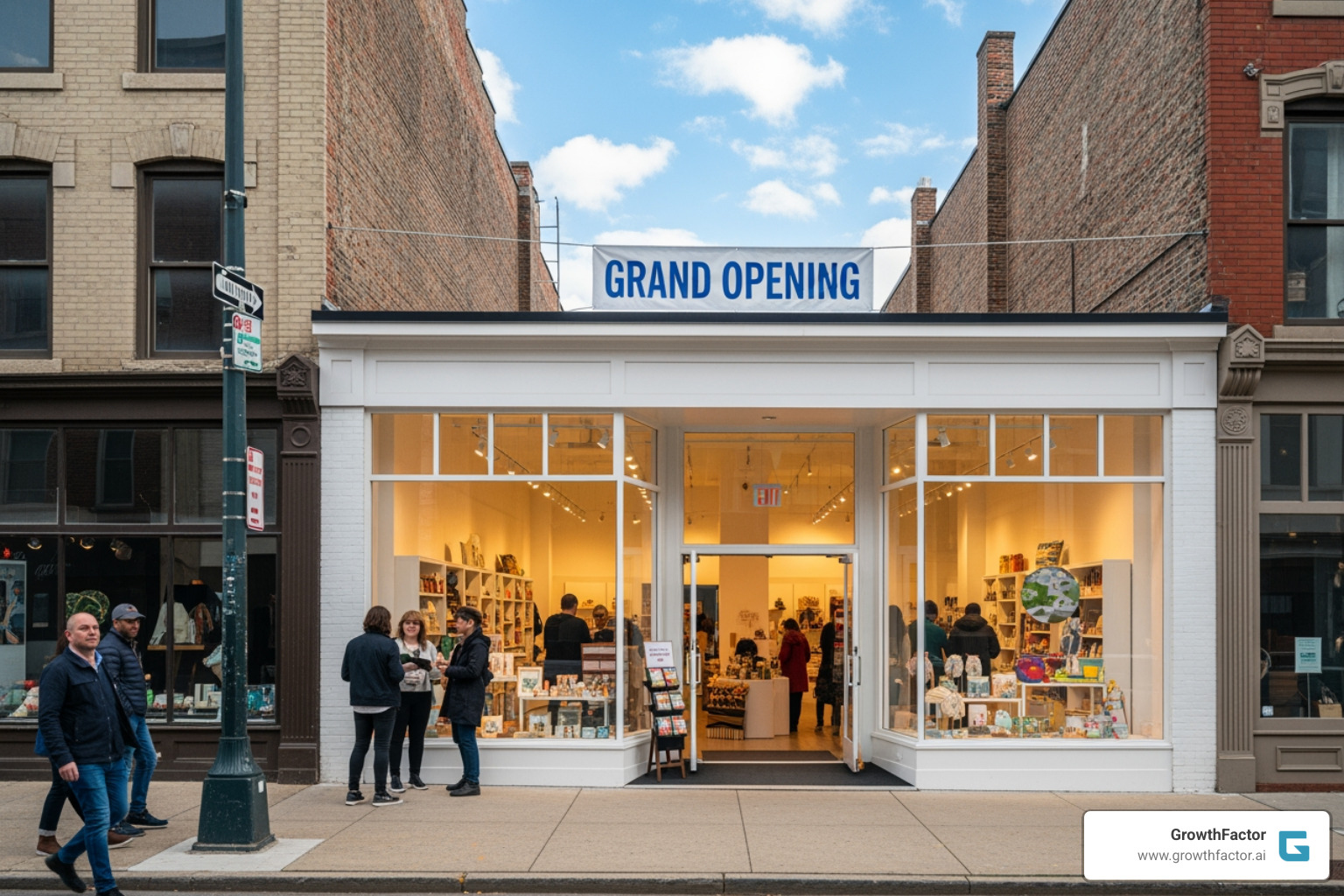
This experiential marketing approach helps us connect with customers on a personal level, building a stronger community around our brand. Pop-ups are excellent for generating social media buzz, as customers often share their unique experiences online, amplifying our reach. Think of it as a temporary Grand Opening Ultimate Guide that keeps the excitement fresh. These temporary spaces create a sense of "Fear Of Missing Out" (FOMO) among consumers, driving them to visit before the opportunity disappears. This not only boosts sales but also reinforces brand loyalty and creates lasting impressions that contribute to our overall Retail Store Expansion Strategy.

What Advantages Do Landlords Gain from Pop-Up Real Estate?
Landlords significantly benefit from pop-up real estate by generating income from otherwise vacant properties, increasing foot traffic throughout their developments, and identifying potential long-term tenants. In today's competitive commercial real estate market, flexibility is key, and pop-ups provide a dynamic solution to common challenges.
For us, pop-ups are a creative way to monetize empty space and inject vitality into our properties. Instead of a storefront sitting dark and unproductive, a temporary tenant can generate revenue, cover operating costs, and even attract new visitors. This is particularly relevant in areas experiencing shifts in retail demand.
One of the most compelling advantages for landlords is the potential to identify and cultivate future long-term tenants. The research shows that one in five pop-up tenants ends up leasing their temporary spaces long-term. This means pop-ups can serve as an audition for both parties, allowing landlords to assess a brand's viability and a brand to test a location's performance without a decade-long commitment. This provides a valuable tenant pipeline that reduces the risk associated with traditional leasing.
Pop-ups also play a crucial role in combating vacancy rates. While national retail vacancy rates reached a 20-year low in 2024, pockets of empty space still exist, and landlords are always looking for ways to keep their properties active. Filling these spaces, even temporarily, prevents blight and maintains a vibrant commercial environment. In fact, pop-ups can often command a higher price-per-square-foot than long-term leases, as they offer flexibility and prime, short-term exposure. For example, a 1,500-square-foot theatre space in Soho, New York, advertised for $2,543 a day, equates to an annual rate of $619 per square foot—a premium for the agility it offers.
Beyond direct revenue, pop-ups contribute to the revitalization of urban retail spaces. They bring novelty and excitement, drawing more people to a shopping district or mall. This increased foot traffic benefits existing tenants and improves the overall appeal of the property, making it more attractive for future permanent leases. Understanding these dynamics is part of a comprehensive Real Estate Intelligence Ultimate Guide, helping landlords make informed decisions about their portfolio.
What Legal Considerations are Crucial for Pop-Up Real Estate Agreements?
Navigating the legal landscape of pop up real estate requires careful attention to the type of agreement, distinguishing between leases and licenses, and ensuring compliance with zoning, insurance, and other municipal regulations. Unlike traditional long-term leases, the temporary nature of pop-ups introduces unique legal nuances that both landlords and tenants must understand.
For us, it's about striking a balance between flexibility and protection. While the goal is to facilitate quick setups and temporary engagements, overlooking legal formalities can lead to significant complications. We must ensure all agreements clearly define responsibilities and expectations, differing significantly from the standard clauses found in traditional, multi-year commercial leases. The article on Legal considerations for temporary tenancies highlights many of these critical differences.
Lease vs. License Agreement
The most fundamental legal distinction in pop up real estate is between a lease and a license agreement. This is not merely a semantic difference; it carries significant implications for the rights and obligations of both parties.
- Lease: A lease grants the tenant a possessory interest in the property. This means the tenant has exclusive use and control over the space for a defined period, and the landlord's access is restricted. Leases typically offer more protection to the tenant but come with more stringent legal requirements and longer terms.
- License: A license, conversely, grants a contractual right to use a space for a specific purpose, but does not convey a possessory interest. The landlord retains control and often has the right to access the space or even revoke the license under certain conditions. Licenses are common for pop-ups due to their short terms, shared spaces (e.g., a kiosk within a larger store), and the flexibility they offer landlords. Courts often look beyond the document's label to its substance, considering factors like revocability, access limitations, and control to determine if it functions as a lease or a license. For landlords, a license can be more appealing as it simplifies eviction processes and allows for greater control over the property.
Key Legal and Operational Problems
Even with short-term agreements, several legal and operational considerations demand careful attention to prevent future disputes:
- Zoning Compliance: Before setting up a pop-up, we must verify that the intended use complies with local zoning laws. A space zoned for offices might not permit retail sales, for instance. This is especially critical in cities like Boston or Cambridge, where zoning regulations can be complex.
- Municipal Permits: Pop-ups frequently require various municipal permits, such as business licenses, temporary event permits, or health permits if food or beverages are sold. Securing these promptly is essential to avoid delays and fines.
- Insurance Coverage: Adequate insurance is non-negotiable. Both landlords and tenants need to ensure they have comprehensive general commercial liability, property, and workers' compensation insurance. The agreement should specify minimum coverage limits and name additional insured parties.
- Americans with Disabilities Act (ADA) Compliance: If a pop-up occupies a repurposed space, it might suddenly become a "place of public accommodation," triggering ADA compliance requirements. Tenants using such spaces should be aware of potential liability for accessibility violations.
- Use Clauses: Landlords should narrowly define the purposes for which a pop-up tenant may use the premises. This prevents unexpected activities that could conflict with other tenants or property regulations.
- Termination and Buyout Provisions: For landlords, including buyout or relocation clauses in license agreements offers flexibility to accommodate a long-term tenant if one emerges. Tenants, in turn, should negotiate for reimbursement of unamortized build-out costs if they are relocated or evicted early.
- Holdover Penalties: Pop-up agreements often include significant holdover penalties to deter tenants from staying past their agreed-upon term, emphasizing the importance of the temporary nature of the agreement.
- Common Area Maintenance (CAM) Charges: For short-term pop-ups, it's often more practical for landlords to build CAM charges and utilities into the base rent rather than calculating and passing them through separately.
How Has Technology Transformed the Pop-Up Real Estate Process?
Technology has fundamentally revolutionized the pop up real estate landscape by streamlining finding and booking, enabling data-driven site selection, automating leasing processes, and providing crucial performance analytics. The era of manually searching for available spaces through brokers and relying on gut feelings for location choices is rapidly becoming a relic of the past.
For us, the shift has been from fragmented, time-consuming processes to integrated, efficient platforms. This evolution has made it easier than ever for brands to find suitable temporary spaces and for landlords to connect with potential tenants. We've seen how AI for Real Estate is changing traditional real estate practices, and pop-ups are no exception.
The Rise of All-in-One Pop-Up Real Estate Platforms
The emergence of all-in-one platforms marks a significant advancement in pop up real estate. These platforms consolidate various aspects of the pop-up process, making it more accessible and manageable for both brands and property owners.
Key features often include:
- AI-powered Matching: Advanced algorithms now intelligently match brands with suitable spaces, considering factors like local consumer data, foot traffic patterns, and even synergy between potential co-vendors. This moves beyond simple availability to strategic placement.
- Turnkey Setup Services: Some platforms offer comprehensive services that go beyond just space, including assistance with physical fixtures, modular furnishings, permit acquisition, insurance guidance, and even Point-of-Sale (POS) system setup. This significantly reduces the logistical burden on brands.
- Integrated Analytics: Smart retail technologies, such as in-store sensors and integrated POS data, provide real-time insights into foot traffic, dwell time, sales conversion rates, and customer feedback. This data is invaluable for optimizing operations and measuring success.
- Collaborative Multi-Brand Pop-ups: These platforms facilitate the curation of multiple complementary vendors into one shared space. This allows brands to collectively rent a larger space, share costs, and coordinate logistics, creating unique shopping experiences and attracting diverse customer bases.
- Automated Lease Agreements: Short-term lease or license agreements are often automated and executed digitally through the platform, simplifying the legal process and reducing administrative overhead for both parties.
These comprehensive platforms are akin to sophisticated Retail Site Selection Software, custom specifically for the unique demands of temporary retail.
Using Data for Smarter Pop-Up Site Selection
In the past, selecting a pop-up location often relied on intuition or anecdotal evidence. Today, data-driven strategies are paramount for maximizing the success of any pop up real estate venture. Moving beyond intuition, we leverage robust data analytics to make informed decisions.
Effective Retail Location Analysis for pop-ups involves scrutinizing several key data points:
- Demographics: Understanding the age, income, lifestyle, and preferences of the population surrounding a potential site helps ensure alignment with our target customer.
- Foot Traffic Data: Analyzing pedestrian flow provides insights into potential customer volume and peak shopping times. Tools that offer real-time foot traffic data are essential for short-term opportunities.
- Competitive Analysis: Identifying nearby competitors and complementary businesses helps us position our pop-up effectively and understand the local retail ecosystem.
This is precisely where GrowthFactor excels. Our platform moves beyond the limitations of traditional tools and spreadsheets. We offer glass box transparency, meaning our users see exactly why a site scores high or low, not just a black-box result. We consolidate all essential data in one place—demographics, foot traffic, competition, zoning, and drive-time analysis—eliminating the need to juggle multiple disconnected tools. As the first platform with integrated zoning layers, we provide critical insights for locations in the USA, including cities like Boston and Cambridge, ensuring compliance and speeding up market entry. With GrowthFactor, teams can evaluate thousands of sites in a fraction of the time, confidently making GO/NO-GO decisions for their pop up real estate strategies.
Frequently Asked Questions about Pop-Up Real Estate
How much does it cost to rent a pop-up space?
The cost to rent a pop up real estate space varies widely depending on factors such as location, size, duration, and amenities included. While prices can range from hundreds to thousands of dollars per day, the price-per-square-foot for pop-ups can often be much higher than for long-term leases, reflecting the flexibility and prime, short-term exposure they offer. For example, a 1,500-square-foot theatre space in Soho, New York, was advertised for $2,543 a day, which equates to an annual rate of $619 per square foot. However, the overall financial commitment is significantly lower due to the short rental periods.
How long does a pop-up shop typically last?
Pop up real estate terms are inherently flexible, designed to accommodate various strategic goals. A pop-up can last as short as a single day, particularly for event-style activations, or extend for several weeks or even up to a year. While some platforms show many pop-up retail spaces are scheduled for around 8 hours for specific events, most strategic pop-ups, like those used for market testing or seasonal sales, typically run for a few weeks to a few months.
What is the difference between a pop-up and a traditional store?
The primary difference between a pop-up and a traditional store lies in their permanence and strategic intent.
- Pop-up shops are temporary retail spaces established for specific, short-term goals such as market testing, brand awareness campaigns, product launches, or seasonal sales. They typically operate under short-term licenses or leases.
- Traditional stores involve long-term leases, often lasting 5-10 years or more, and represent a permanent physical presence for a brand, focusing on consistent sales and long-term market penetration.
Are pop-up shops a successful strategy?
Yes, data consistently indicates that pop-up shops are a highly successful strategy for many brands. A 2019 survey revealed that 80% of global retail companies that opened a pop-up reported it was successful, with a significant 58% stating they were likely to use the tactic again. This success is often attributed to their ability to generate buzz, test markets with minimal risk, and create unique customer experiences.
What kind of businesses use pop-up shops?
A wide range of businesses use pop up real estate due to its versatility. This includes:
- E-commerce brands: Many online-only retailers use pop-ups as a "clicks-to-bricks" strategy to establish a physical presence, connect with customers offline, and build brand loyalty.
- Established retailers: Larger brands use pop-ups to launch new products, test new concepts, or enter new markets without committing to a permanent store.
- Small businesses and artisans: Pop-ups offer an affordable entry point into physical retail, allowing them to showcase their products and reach new audiences.
- Food and beverage companies: These often use pop-ups for seasonal offerings, catering events, or testing new menu items.
- Service-based businesses: Even services, like fitness studios or beauty brands, use pop-ups to offer temporary experiences or test new locations.
Do I need a special permit for a pop-up shop?
Yes, you will often need special permits for a pop-up shop, and the specific requirements vary significantly by municipality and the nature of your business. In cities across the USA, including Boston and Cambridge, you may need:
- A general business license.
- Temporary event permits, especially if operating in a public space or for a special event.
- Health permits if selling food or beverages.
- Zoning approvals to ensure your temporary retail use is permitted in the designated area.
- Proof of adequate insurance.
It is crucial to check local regulations well in advance of your planned pop-up to ensure full compliance and avoid any legal issues.
The Future of Retail is Flexible: What's Next?
The future of retail is undeniably flexible, and pop up real estate is ready to play an increasingly permanent and strategic role within that landscape. We anticipate deeper integration with omnichannel strategies, where the physical pop-up seamlessly connects with online platforms to create a holistic customer journey. This means using pop-ups not just for sales, but as interactive showrooms, fulfillment centers for online orders, or unique brand experience hubs.
We also foresee a greater use of AI for personalization within pop-up experiences. Imagine a pop-up that adapts its product display or interactive elements based on real-time customer demographics or past online behavior, all guided by AI. This level of customization will make pop-ups even more compelling and effective.
The "multiplier effect" of social media, where customers share their unique pop-up experiences, will continue to be a powerful driver of engagement and brand awareness. Furthermore, as sustainability becomes a core concern, we expect to see more innovative and eco-friendly approaches to temporary design and construction for pop-up spaces.
The pop-up concept has truly grown up and is here to stay, evolving from a temporary fix to a sophisticated component of modern retail strategy. To build a flexible and data-driven expansion plan that incorporates strategies like pop-ups, explore how an all-in-one platform can provide the clarity you need. Learn more about pop-up retail strategy.
Citations
The human algorithm
Request Your demo
Schedule meeting
Or submit your information below and we'll be in touch to schedule.