
Don't Guess, Assess: Your Guide to Pinpointing Market Demand
Why Understanding Market Demand is Critical for Business Success
To identify market demand, you must determine the total quantity of a product or service consumers are willing to purchase at a given price. This involves conducting market research, using digital tools, analyzing competitors, calculating total demand, and monitoring market shifts continuously.
Did you know that 35% of the time startups fail because there is no market need? This statistic from CB Insights highlights a core truth: a great product is worthless if no one will buy it. Understanding market demand is the key to avoiding costly mistakes, whether you're launching a product, expanding, or validating a business concept.
Market demand is your business's north star, guiding resource allocation, pricing, and expansion. For retail executives, accurately identifying demand means opening profitable locations instead of wasting capital on underperforming stores.
The problem is that traditional demand analysis is slow and manual. By the time insights are gathered, the market has already changed.
I'm Clyde Christian Anderson, founder of GrowthFactor.ai. With over a decade in retail real estate and site selection, I know the frustration of working without the right data. I built GrowthFactor to give retailers the tools to identify market demand quickly and confidently, turning site selection from guesswork into a strategic advantage.

What is Market Demand and Why It's Your Business's North Star
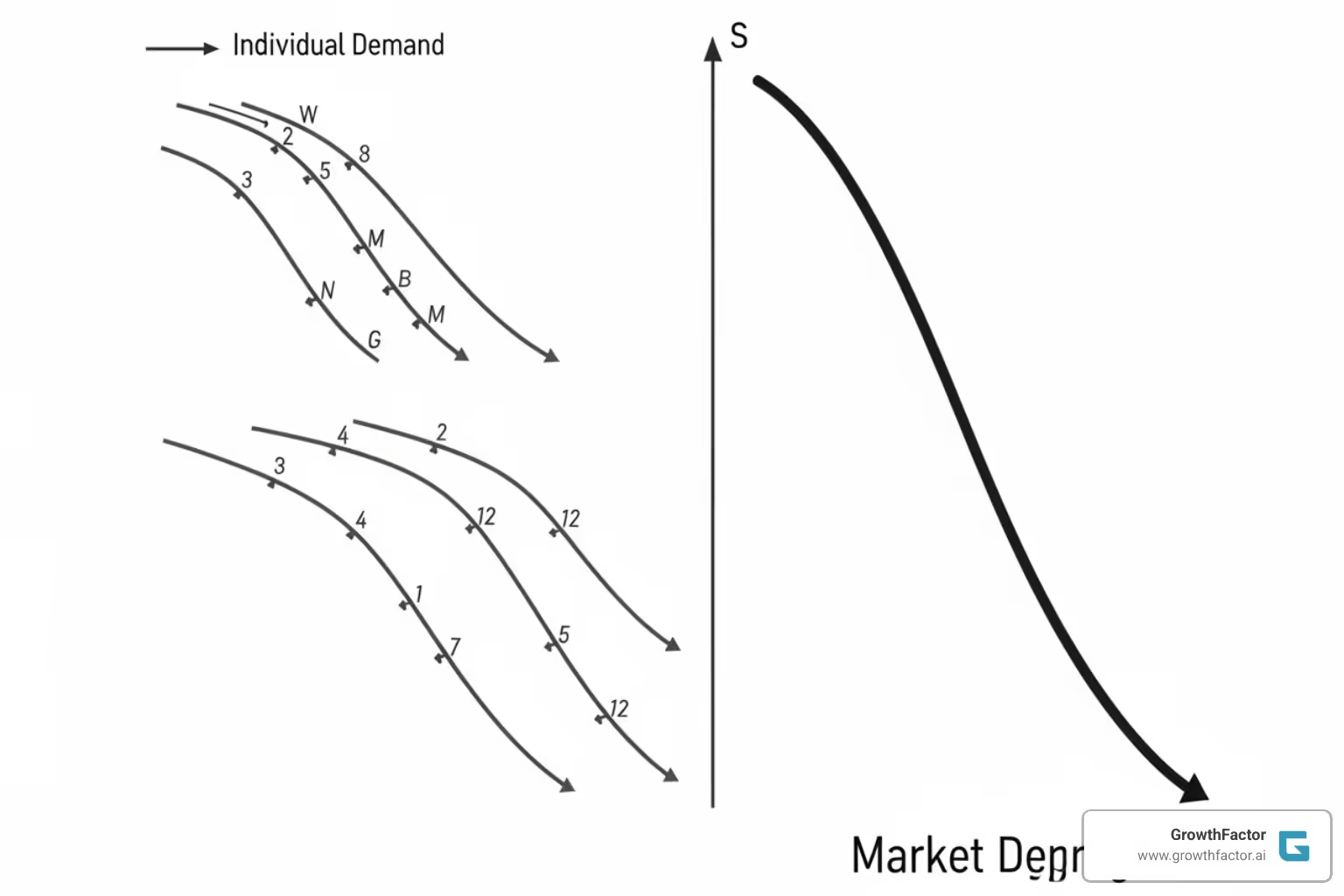
Market demand is the total quantity of a product or service that all consumers in a market are willing and able to purchase at various prices over a specific period. It's the aggregate of all individual demand—one person's desire to buy—into a complete picture of the market's purchasing power. This aggregation transforms scattered preferences into actionable business intelligence.
Understanding market demand is the foundation of smart business decisions. It allows you to:
- Allocate resources efficiently: Know how many units to produce, how much inventory to stock, and where to focus marketing efforts, avoiding overproduction and stockouts.
- Minimize risk: The 35% startup failure rate due to no market need shows the cost of ignoring demand. Validating demand first prevents you from pouring resources into a failing venture.
- Guide strategic planning: Demand data provides a roadmap for feature development, market expansion, and identifying growth areas. As the U.S. Small Business Administration notes, market research and competitive analysis are crucial first steps to understanding market needs.
- Gauge commercial viability: It's the reality check that separates a viable business from an expensive mistake, ensuring you're creating something people will actually pay for.
Key Factors That Influence Market Demand
Market demand is dynamic, influenced by several factors:
- Price: The most direct factor. Typically, as price increases, demand decreases (the law of demand).
- Consumer income levels: Higher incomes generally lead to higher demand, especially for non-essential goods.
- Tastes and preferences: Cultural shifts, advertising, and social media trends can rapidly change what consumers want.
- Price of substitute goods: Cheaper or more appealing alternatives can draw customers away, as seen with streaming services impacting cable TV.
- Population demographics: The size and composition of your target market are fundamental. An aging population has different needs than a young one. Understanding site demographics is vital for retailers.
- Economic conditions: Inflation, interest rates, and consumer confidence all affect spending habits. Expectations about the future economy also play a significant role.
These factors interact, creating a complex environment that requires constant monitoring.
The Market Demand Curve Explained
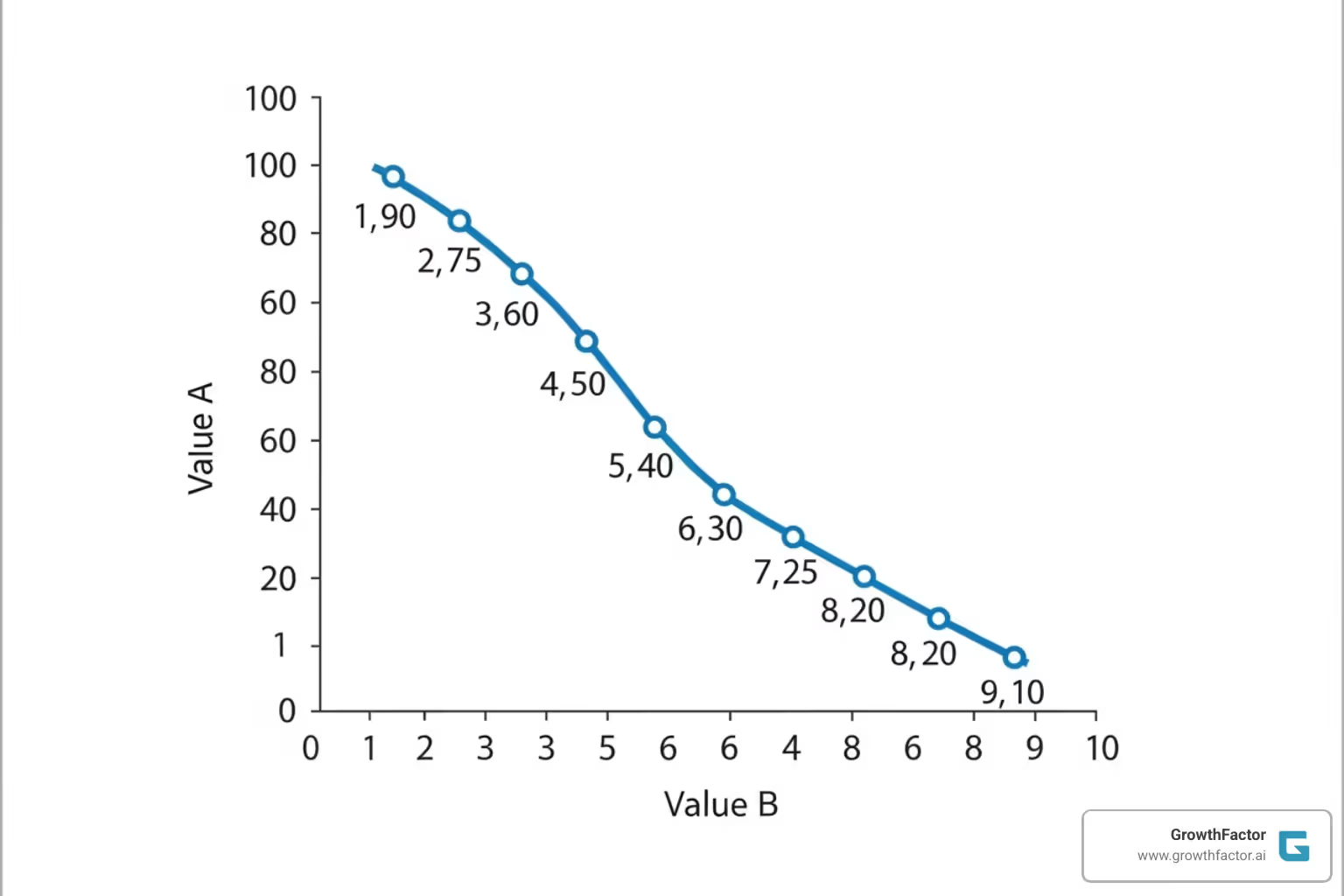
The market demand curve is a graph that visually represents the relationship between a product's price and the quantity consumers are willing to buy. With price on the vertical axis and quantity on the horizontal, the curve almost always slopes downward, illustrating the law of demand: as prices fall, quantity demanded rises.
More importantly, the entire curve can shift. A change in an underlying factor, like a positive health trend, can shift the curve to the right, meaning consumers want more at every price. A negative event could shift it left, reducing demand across the board. Understanding these shifts is crucial for pricing and forecasting. As Investopedia explains, the demand curve is a graphical representation of the relationship between price and quantity.
For retailers, these shifts inform decisions on store locations, inventory, and pricing. Our guide to retail demand forecasting explores how to turn these insights into predictions.
How to Identify Market Demand: A Practical Toolkit
Moving from theory to practice, this toolkit provides a systematic process to identify market demand. For retailers, this data-driven approach is the foundation of effective data-driven site selection and informs where to open stores, what to stock, and how to reach customers. Here are four steps to take you from uncertainty to clarity.
Step 1: Conduct Foundational Market Research
Start with a solid foundation of market research, which includes both secondary and primary methods.
Secondary research involves using existing data. It's cost-effective and provides a big-picture view. Key sources include:
- Industry Reports: Sources like IBISWorld or Statista offer insights into market size, growth trends, and consumer behavior.
- Government Data: Agencies like the U.S. Census Bureau provide invaluable data on population shifts, income levels, and demographics. The BC Ministry of Agriculture and Food offers a practical guide on conducting market research with universal principles.
Primary research means collecting new data directly from your target audience.
- Surveys: Gather quantitative data at scale on preferences, purchasing habits, and price sensitivity.
- Focus Groups: Uncover the "why" behind the numbers through guided group discussions.
- Customer Interviews: One-on-one conversations can reveal rich, nuanced insights and unmet needs. For example, the story of a tap dancer with a nail glue allergy inspired an entire press-on nail line with adhesive tabs, revealing a broader market gap.
This foundational research is crucial for understanding your customers. For a deeper dive, see our guide to retail market research.
Step 2: Use Digital Tools to identify market demand
Digital tools provide massive amounts of market data with speed and precision.
- SEO and Keyword Research: People's online searches reveal what they want. Free tools like Google Keyword Planner show monthly search volumes for terms related to your product. More advanced tools like Semrush and Ahrefs offer deeper insights into user intent and location-based searches.
- Search Trend Analysis: Tools like Google Trends are invaluable for spotting seasonal demand and emerging interests, with filters for specific regions or cities. Exploding Topics helps you find trends before they go mainstream.
- Social Listening: Monitor online conversations to understand customer sentiment and pain points. Tools like Brand24 or Sprout Social track mentions of keywords and brands across social media, forums, and review sites, revealing unmet demand in real-time.
These tools offer a live view of market desires, helping you validate assumptions with actual behavior.
Step 3: Analyze Competitors and Market Trends
Analyzing your competition is a powerful way to identify market demand. By studying their market share, pricing, and product offerings, you can spot gaps and opportunities.
Competitive analysis helps you find where competitors are falling short. Customer complaints on social media can be a clear sign of an unmet need you can address. This is where you can find exciting market gaps. For example, Detroit Hives was started when its founders noticed a lack of local honey producers in the city, successfully filling an unmet demand. Similarly, major product launches, like the Apple Vision Pro, create demand for related accessories and apps.
Beyond direct competitors, monitor broader market trends like shifting consumer values (e.g., sustainability) and technological advancements. Staying ahead of the competition is vital for a competitive edge, as these macro trends can create or disrupt demand patterns overnight. For retailers, a deep dive into retail site analysis can reveal where demand is underserved.
Step 4: Calculate and Estimate Total Market Demand
Translate your research into numbers with a structured estimation. While not an exact science, this approach is far better than a guess. The method involves three components:
- Target Market Size: How many potential customers exist in your defined market?
- Average Consumption Rate: How much of your product would an average customer consume in a given period?
- Expected Market Share: What percentage of the total demand can you realistically capture?
For example, if 12 million Americans practice yoga and the average person buys 0.5 mats per year, the total potential demand is 6 million mats annually. If your new brand expects to capture 1% of that market, your estimated demand is 60,000 mats per year.
This calculation is a baseline. Adjust it for pricing, competition, and market trends. Harvard Business Review's article on four steps to forecast total market demand provides a more detailed framework. This is a living model; regular sales forecasting is critical for retail site selection to keep your estimates aligned with reality.
From Insight to Action: Applying Demand Analysis to Your Strategy
Gathering data is only half the battle; the real value comes from turning those insights into concrete business decisions. Demand analysis is the compass that guides every major decision, from product development to store location.

Consider Domino's Pizza's turnaround. They listened to customer feedback that their pizza was subpar, used that insight to revamp their product, and launched an honest marketing campaign acknowledging their failures. The result was a complete business change. Similarly, Peloton capitalized on the pandemic-driven surge in demand for at-home fitness by recognizing the shift and scaling to meet it. These examples show that winners translate insights into action faster than competitors.
Informing Product Development and Innovation
Demand analysis prevents you from building a product nobody wants. By understanding customer needs, you can prioritize features that matter most. If research shows convenience is key, you focus on ease of use. If sustainability is a driver, you invest in eco-friendly processes.
The real gold is finding unmet needs—gaps in the market where customers are desperate for a solution. This is how new product categories are born. Apple demonstrated this with the iPhone X, identifying demand for cutting-edge tech and a seamless experience to deliver features like Face ID, which customers didn't even know they wanted. For retailers, innovation also applies to location development; our guide to AI site selection explores how technology can create a competitive advantage.
Setting Effective Pricing and Marketing Strategies
Demand analysis removes the guesswork from pricing. Understanding price elasticity—how sensitive customers are to price changes—is fundamental. This knowledge allows you to price strategically.
With value-based pricing, you set prices based on the perceived value to the customer, not just your costs. If research shows customers see your product as premium, you can price it accordingly. Some industries, like airlines and hotels, use dynamic pricing, adjusting prices in real-time based on demand fluctuations.
On the marketing side, demand insights help you segment our audience and craft messages that resonate. Instead of generic appeals, you can speak directly to what different groups care about, whether it's value for a budget-conscious segment or quality for a premium one. Our location intelligence: retail guide explains how understanding customer segments in specific locations can boost marketing effectiveness.
Optimizing Your Retail Location and Expansion
For us at GrowthFactor, this is where everything culminates. The ultimate question for a retailer is: Where should we open our next store?
The answer requires understanding that market demand varies dramatically by geography. You must identify geographic hotspots where demand for your concept is strong, looking beyond basic demographics to purchasing power, lifestyles, and shopping behaviors.
Foot traffic analysis is another critical layer. A location must be visible and accessible to capture existing demand. The competitive landscape also matters; entering an underserved market with strong latent demand can be highly profitable, while a saturated market is a risk even if underlying demand is high.
At GrowthFactor, we synthesize these demand signals—demographics, purchasing behavior, traffic, competition—to identify market demand at a granular level. This allows clients to expand with confidence, backed by data. Our complete guide to retail location analysis and site selection strategy framework provide more detail on turning insights into profitable location decisions.
Frequently Asked Questions about Identifying Market Demand
What is the difference between market demand and individual demand?
Individual demand is personal—it's what one person is willing and able to buy at a certain price. Market demand is the sum of all individual demands across an entire market. It's the big picture that tells businesses the total quantity a product or service the entire market is ready to purchase. Businesses build strategies around market demand, not one person's preferences.
How can a small business identify market demand with a limited budget?
You don't need a massive budget to identify market demand. Start with free digital tools like Google Trends and Google Keyword Planner to see what people are actively searching for. Use social listening by monitoring conversations on platforms where your customers are active to find unmet needs. Finally, talk directly to potential customers through simple surveys or interviews, and analyze your local competitors to spot market gaps and areas of strong demand without spending a dime.
How often should a business analyze market demand?
Market demand analysis is not a one-time task; it's an ongoing commitment because markets constantly change. A thorough, in-depth analysis is essential before any major decision, like a product launch or new store opening. However, continuous monitoring—at least quarterly or semi-annually—is just as important. This regular pulse-check allows you to track shifts in consumer behavior and competitive moves, enabling you to adjust your strategy proactively and stay ahead of market changes.
Conclusion: Turn Market Demand into Your Competitive Advantage
Understanding market demand is the difference between thriving and merely surviving. We've covered how to systematically identify market demand and translate those insights into smarter product, pricing, and location strategies.
The businesses that win are those that truly understand what their customers want and where they want it. They are proactive, continuously monitoring market shifts and refining their strategies based on data, not gut feelings. This approach transforms uncertainty into a strategic opportunity and replaces expensive mistakes with calculated growth.
For retailers, where every new location is a significant investment, this is critical. Leveraging an AI-powered platform for market evaluation turns raw demand insights into profitable location strategies, ensuring every expansion decision is backed by data-driven intelligence. The competitive advantage comes from turning insights into action—consistently, systematically, and confidently.
Citations
The human algorithm
Request Your demo
Schedule meeting
Or submit your information below and we'll be in touch to schedule.

