
Measuring the Bite: A Guide to Cannibalization Formulas
Why Knowing How to Calculate Cannibalization Rate Can Save Your Next Product Launch
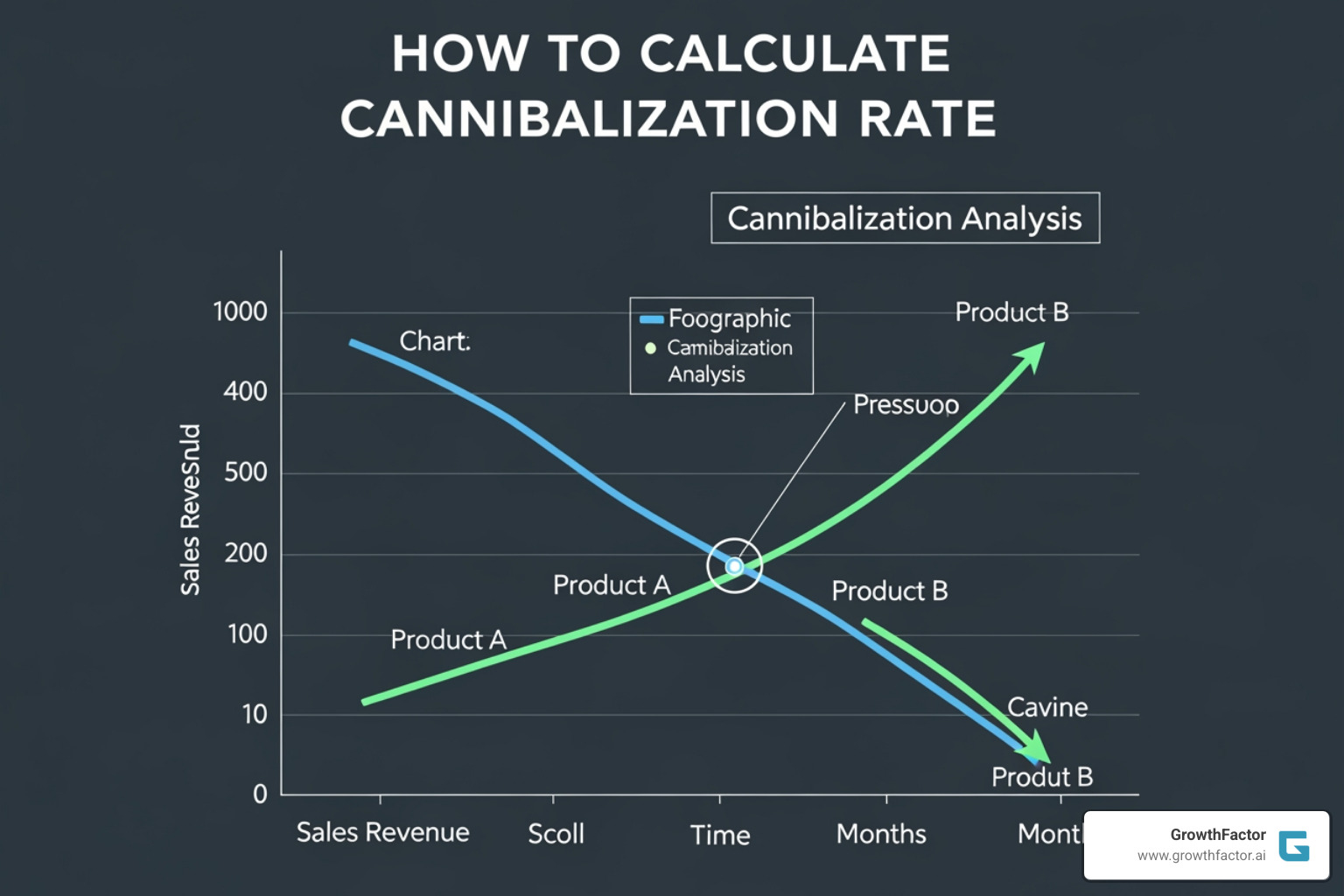
How to calculate cannibalization rate comes down to one straightforward formula:
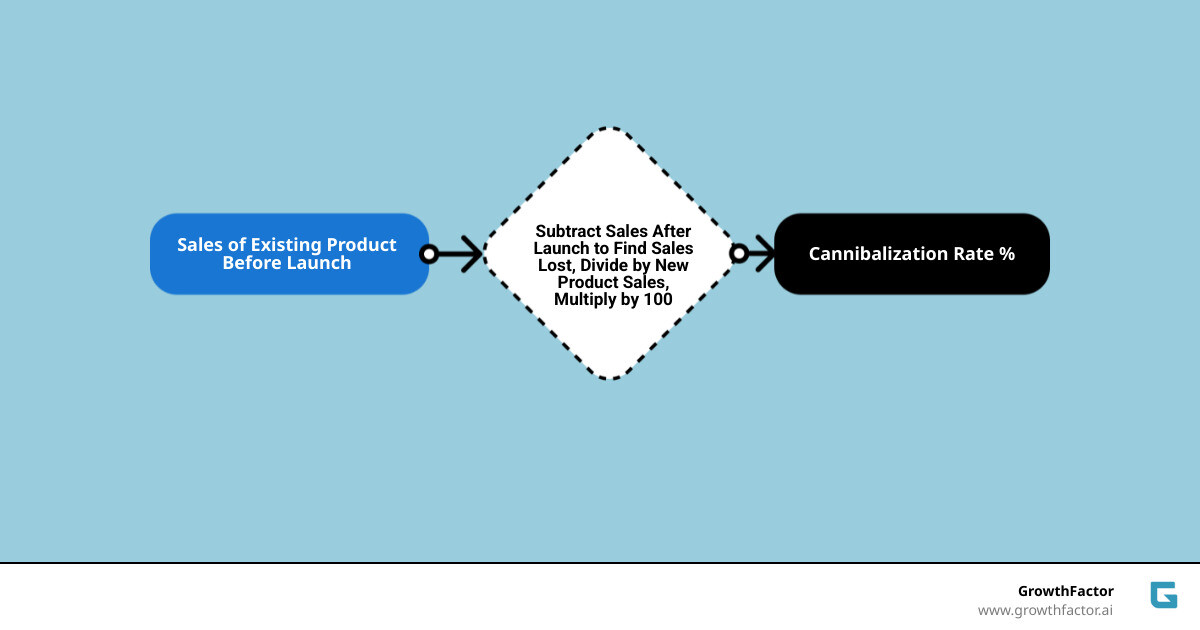
Cannibalization Rate = (Sales Lost on Existing Product / Sales of New Product) x 100
For example, if your existing product loses 65 units per month after a new product launches and that new product sells 250 units, your cannibalization rate is 26%.
Here's a quick-reference breakdown:
| What You Need | Where to Get It |
|---|---|
| Sales of existing product before launch | Historical sales data |
| Sales of existing product after launch | Post-launch sales reports |
| Sales lost = Before minus After | Simple subtraction |
| Sales of new product | New product sales data |
| Cannibalization Rate | (Sales Lost / New Product Sales) x 100 |
More than 30,000 new consumer products hit the market every year. Around 95% of them fail. But even the ones that succeed can quietly hurt the products already on your shelves.
Cannibalization doesn't always look like failure. Sometimes it looks like a product launch going great, right up until you notice your existing line has been bleeding sales for three months.
For retail real estate analysts and expansion teams, this gets even more complicated. You're not just asking "will this new product steal from the old one?" You're asking "will this new store steal from the one we opened two years ago three miles away?" The math is the same. The stakes are higher.
This guide walks through exactly how to measure it, what the numbers mean, and when a high rate is actually fine.
I'm Clyde Christian Anderson, Founder and CEO of GrowthFactor.ai, where my team and I have helped retailers evaluate 3,250+ sites in the past six months alone. Cannibalization analysis is a big part of that work, because nobody wants to sign a lease and then realize they just moved sales from one store to another.
Related content about How to calculate cannibalization rate:
Understanding Market Cannibalization and Its Impact
Market cannibalization is what happens when a company's new product or new store location eats into the sales and market share of its own existing offerings. Instead of capturing new customers from competitors, you are essentially shifting your own customers from one pocket to another.
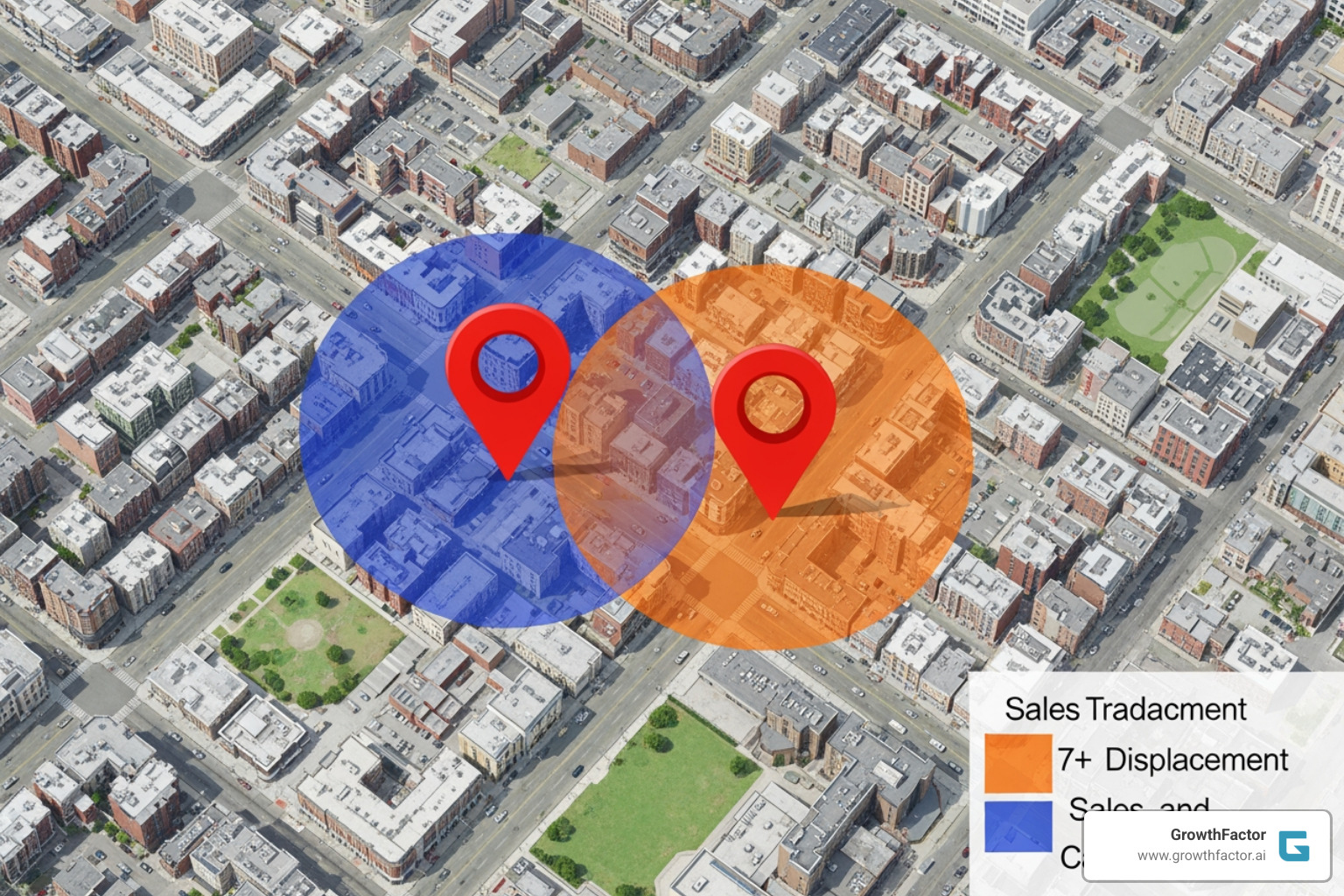
In the retail world, this often happens because of overlapping trade areas. If you open a second sandwich shop two blocks away from your first one, you aren't necessarily doubling your customers. You might just be splitting the same hungry office workers between two lines.
However, cannibalization isn't always a mistake. Strategic giants like Apple use planned cannibalization to stay ahead. When Apple releases a new iPhone, they know it will kill the sales of the previous model. They do it anyway because if they don't "eat" their own sales, a competitor like Samsung will.
The goal of portfolio management is to add incremental value or protect the brand from obsolescence, rather than simply replacing old sales with new ones. Without knowing how to calculate cannibalization rate, you are flying blind, unable to tell if your innovation is growing the pie or just cutting it into smaller, more expensive slices.
How to Calculate Cannibalization Rate: The Standard Formulas
To get a clear picture of the damage (or lack thereof), we use the cannibalization rate definition, which is the percentage of new sales that came directly at the expense of existing products.
There are two primary ways to look at this: through sales volume (units) or through revenue (dollars).
How to calculate cannibalization rate using sales volume
This is the most common method for inventory managers and supply chain teams. It tells you exactly how many units of the old product were displaced by the new one.
The Formula:(Old Product Unit Loss / New Product Unit Sales) x 100
The Step-by-Step:First, identify the baseline by looking at how many units of "Product A" you sold monthly before the launch (e.g., 1,000 units). Next, measure the post-launch dip to see how many units you sell now (e.g., 800 units). Subtract the two to find the loss of 200 units. Then, count the new sales for "Product B" (e.g., 500 units). Finally, divide the loss by the new sales and multiply by 100 to get a 40% cannibalization rate.
You can use a Product Cannibalization Calculator to run these numbers quickly, but the logic remains the same: 40% of your new product's success came from people who would have bought your old product anyway.
How to calculate cannibalization rate using revenue
For the finance team and C-suite, dollars matter more than units. If your new product is more expensive (a "premium" version), a high volume cannibalization rate might actually be a win for the bottom line.
The Formula:(Total Revenue Loss on Old Product / Total Revenue of New Product) x 100
Example:
- Old Product Revenue Loss: $10,000
- New Product Total Revenue: $50,000
- Cannibalization Rate: ($10,000 / $50,000) x 100 = 20%
In this scenario, even if you lost some customers on the old line, the new product's higher price point might mean your total company revenue increased. This is a key part of Cannibalization Analysis Retail because it helps you see if you are successfully "trading up" your customers to higher-margin items.
| Method | Best For | Focus |
|---|---|---|
| Sales Volume | Inventory & Operations | Unit movement and shelf space |
| Revenue | Finance & Strategy | Profitability and "Trade-up" success |
Interpreting Your Results and Industry Benchmarks
Once you have the percentage, what does it actually tell you? Not all cannibalization is created equal.
A rate between 0-10% is the dream, meaning your new product is attracting almost entirely new customers or stealing them from competitors. A 10-20% rate is standard for most retail expansions where you expect some overlap but strong net growth. If the rate hits 20-30%, you are in a danger zone and need to check if the new product offers enough of a margin boost to justify the loss. Anything above 30% is very high; unless this was a planned move like a tech upgrade, you are likely just cannibalizing your own success.
According to Harvard Business School research, the high failure rate of new products often stems from a lack of clear differentiation. If the customer can't tell why they should buy the new thing in addition to the old thing, they will just buy the new thing instead of the old one.
Identifying Sales Loss and Data Requirements
To accurately figure out how to calculate cannibalization rate, your data needs to be clean. You can't just look at a sales dip and blame the new product. You have to account for seasonal trends, economic shifts, and competitor moves.
To get this right, you need at least 12 months of historical sales velocity to account for seasonality. For physical stores, you also need a trade area analysis to see where customers live. If 50% of your new store's customers live in the same zip code as your old store, that's a red flag. Finally, use loyalty program data to check for customer overlap and see if the same individuals are switching products.
Take Coca-Cola as an example. When they launch a new flavor like Coke Cherry or Coke Zero, they expect to lose some original Coke sales. However, by offering variety, they keep the customer within the "Coke" family rather than letting them wander over to a competitor's sparkling water or tea.
Strategic Cannibalization: When Eating Your Own Sales Works
We often talk about cannibalization as a "bite" out of your profits, but sometimes it is a defensive necessity.
Microsoft frequently updates Windows or Office to prevent obsolescence. They know the new version will kill the old one, but they do it to keep customers from moving to Google Workspace or Apple.
Market expansion is another reason. A brand might release a "Value" version of a premium product. Some premium customers will "trade down" to save money, but the move might attract thousands of new customers who couldn't afford the premium version before.
Finally, offering more choices like different sizes or flavors builds brand loyalty. This can increase the total "share of wallet" even if individual product sales fluctuate.
In these cases, the "loss" on the old product is a small price to pay for long-term market dominance.
Frequently Asked Questions about Cannibalization
What is a normal cannibalization rate?
In the retail world, a rate between 10% and 20% is often considered acceptable for a new store opening or a major product line extension. If you are in the tech industry, the rate can be much higher (50%+) as newer models are designed to replace older ones entirely.
Can cannibalization be beneficial for a business?
Yes. It is beneficial when it prevents a competitor from entering the market, when it moves customers to a higher-margin product, or when it refreshes a brand that was becoming "stale." As Steve Jobs said, if you don't cannibalize yourself, someone else will.
How do you forecast cannibalization before a launch?
Forecasting requires looking at trade area overlap and customer segmentation. At GrowthFactor, we help retailers look at foot traffic patterns and demographics to predict how much a new location will "pull" from an existing one before a lease is ever signed.
Conclusion
Understanding how to calculate cannibalization rate is the difference between growing your business and just moving the furniture around. Whether you are launching a new snack flavor or opening your 50th retail location, you need to know if your "growth" is actually incremental.
At GrowthFactor, we specialize in taking the guesswork out of these decisions. We replace the messy spreadsheets and disconnected tools that expansion teams juggle today with one unified platform.
You can see exactly why a site scores the way it does (no black boxes), pull demographics, foot traffic, competition, zoning, and drive-time analysis in one place, and bring in analyst support when you need a clean GO/NO-GO call.
We've evaluated over 3,250 sites in just six months for brands like Cavender's and Books-A-Million. If you want to protect existing sales while adding new ones, learn more about retail expansion solutions and see how GrowthFactor can help.
Citations
The human algorithm
Request Your demo
Schedule meeting
Or submit your information below and we'll be in touch to schedule.

