
The A to Z of Retail Real Estate: Leasing, Finance, Development, and More
What is Retail Real Estate?
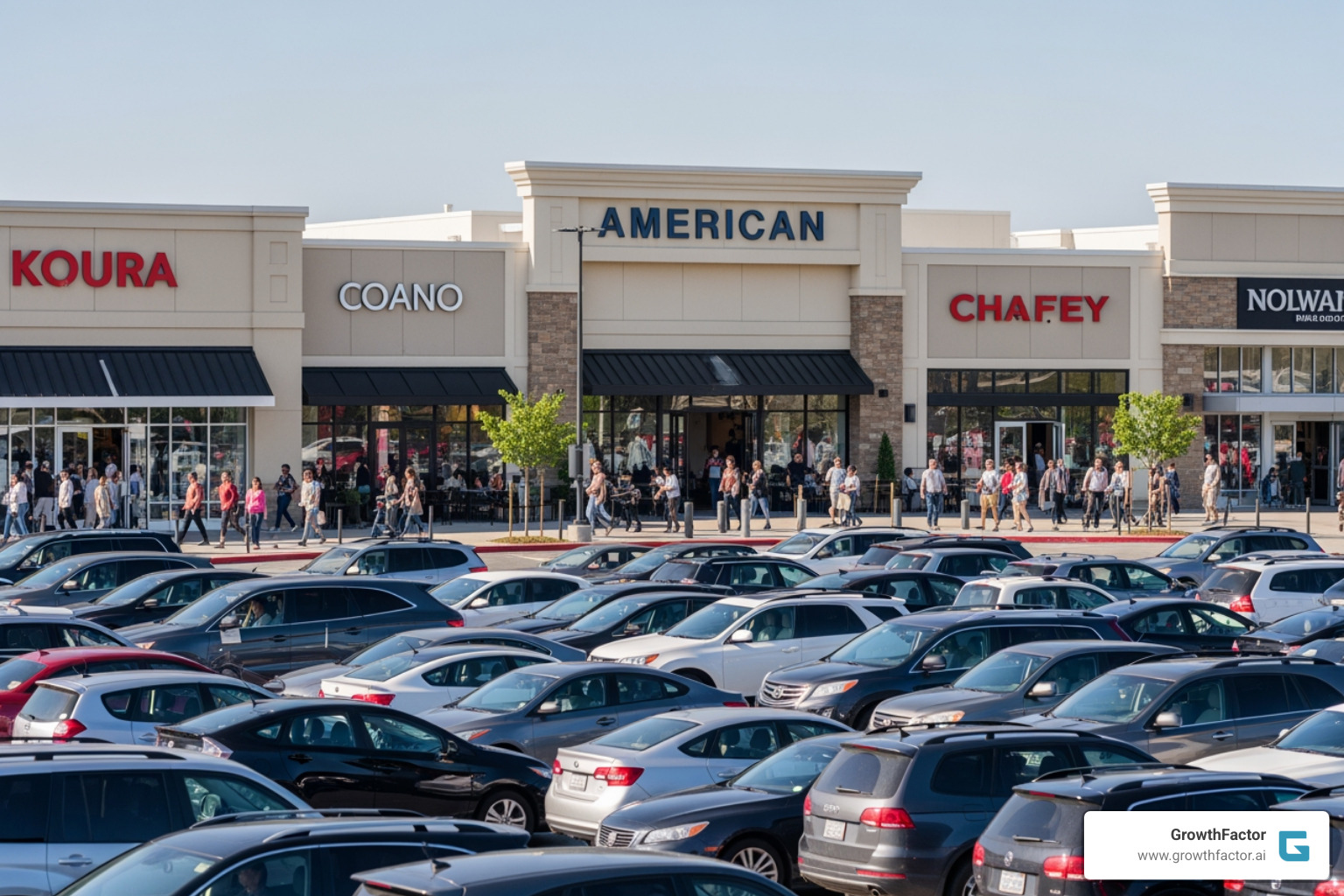
Retail real estate refers to commercial properties designed for businesses that sell goods or services directly to consumers. This includes shopping malls, grocery-anchored strip centers, and standalone fast-food buildings.
The basics:
| Category | Description |
|---|---|
| Definition | Properties zoned and built for consumer-facing retail businesses |
| Users | Retailers, restaurants, service businesses, and franchises |
| Main types | Malls, power centers, lifestyle centers, community centers, neighborhood centers, convenience centers, factory outlets, and mixed-use |
| Key difference | Retail properties prioritize foot traffic, visibility, and public access in ways office or industrial properties don't |
| Common lease types | Triple net (NNN), gross lease, and modified net lease |
| Investor appeal | Long-term leases, stable income, and historically low vacancy rates (3.9% as of mid-2024) |
Retail real estate sits under the broader umbrella of commercial real estate, but it has its own rules. Location is the whole game. A pharmacy in the wrong zip code fails. The same brand, one mile away, thrives.
If you've ever wondered why certain shopping centers feel busy while others feel abandoned, the answer almost always comes down to site selection, anchor tenants, and demographic fit. Those are the variables that separate a 15-year cash-flowing asset from an expensive mistake.
I'm Clyde Christian Anderson, Founder and CEO of GrowthFactor.ai, where I've spent years helping retail brands answer the question of what retail real estate is worth at any given location. I started evaluating retail sites at age 15 in my family's business and later analyzed retail deals from the finance side at Wells Fargo and BDT & MSD. That background shapes everything in this guide, from how we define property types to how investors and real estate teams should think about evaluating sites.

Retail real estate terms made easy:
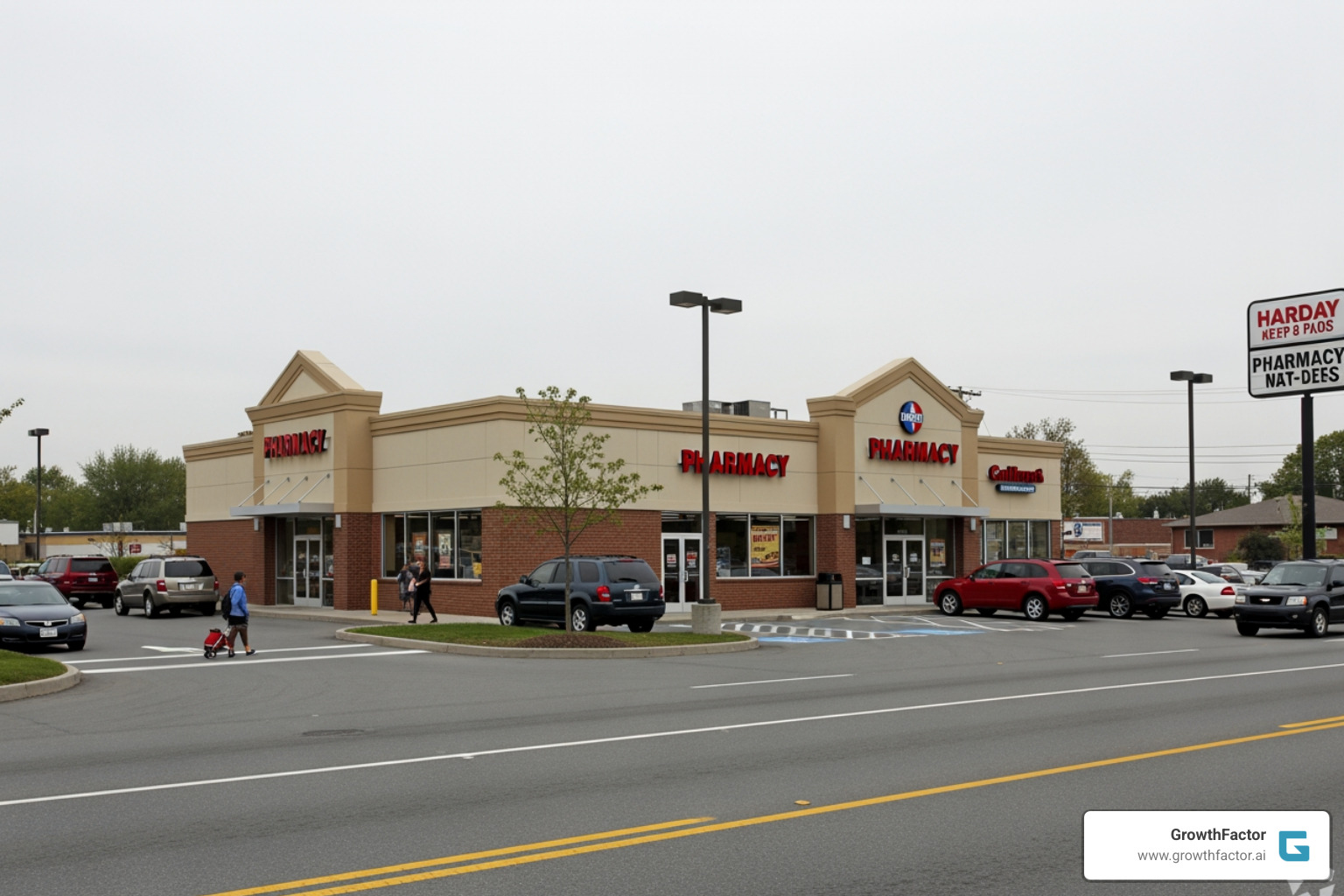
Fundamentally, retail real estate is any property used to market and sell consumer products and services. While an office building houses people doing work and an industrial warehouse stores pallets of goods, a retail property is where the transaction happens between a business and a customer.
Because these properties rely on people walking or driving through the doors, they are built with public accessibility in mind. You won't find a successful grocery store tucked away in a hidden cul-de-sac. Instead, Retail Real Estate: Definition, Types & Examples - RETAILBOSS notes that these assets are strategically placed in high-traffic areas where they can be easily seen and accessed.
Defining What is Retail Real Estate for Investors
For those putting capital to work, retail real estate is an asset class defined by its income-generating potential. Unlike residential real estate, which is governed by housing laws, retail properties are commercial assets. They require specific zoning that allows for the sale of goods.
We evaluate properties based on four factors:
- Zoning: Does the local municipality allow for the specific type of business, such as a restaurant with a drive-thru versus a boutique?
- Accessibility: Can customers get in and out easily? This includes parking ratios and ADA compliance.
- Visibility: Is the signage clear from the road? High "road frontage" is often a requirement for national brands.
- Visual Appeal: Retailers want their physical storefront to be an extension of their brand. A run-down center with peeling paint is a hard sell for a premium tenant.
The 8 Main Types of Retail Real Estate Properties
One of the biggest mistakes people make is calling every outdoor shopping center a "strip mall." In the industry, we use specific classifications developed by organizations like the International Council of Shopping Centers (ICSC). Using the right names helps us understand the risk profile and the type of customers a site will attract.
| Property Type | Typical Size (SQ FT) | Main Anchor Tenants |
|---|---|---|
| Regional Mall | 400,000 - 800,000+ | Department stores, fashion brands |
| Power Center | 250,000 - 600,000 | Big-box (Target, Best Buy, PetSmart) |
| Lifestyle Center | 150,000 - 500,000 | Upscale dining, specialty retail |
| Community Center | 125,000 - 400,000 | Discount stores, large specialty shops |
| Neighborhood Center | 30,000 - 125,000 | Supermarket or drugstore |
| Convenience Center | < 30,000 | Dry cleaners, nail salons, coffee shops |
| Factory Outlets | 50,000 - 400,000 | Manufacturer-direct brands |
| Mixed-Use | Varies | Ground-floor retail with residential/office above |
Size Ranges and Characteristics of What is Retail Real Estate
To really "geek out" on these types, we can look at the ICSC Research standards. Each format serves a different purpose in a community's trade area.
Malls are the largest properties in the industry. They are typically enclosed and anchored by large department stores. While some smaller malls struggle, the largest ones are massive. For instance, the New South China Mall in Dongguan totals over 7 million square feet. In the US, regional malls usually start at 400,000 square feet.
Power Centers handle the bulk of suburban retail. They are usually open-air and dominated by big-box retailers. A typical power center consists of 75% to 90% anchor tenant space. If you see a Target, a Home Depot, and a Dick's Sporting Goods sharing a massive parking lot, you're in a power center.
Lifestyle Centers gained massive popularity in the 1990s. These are upscale, open-air centers that feel like a downtown street. They focus on "retailtainment," combining high-end shops with full-service restaurants and outdoor seating. They usually range from 150,000 to 500,000 square feet.
Neighborhood Centers are the most resilient property type. They sell things people need regardless of the economy. These are usually anchored by a grocery store or a large pharmacy. They serve a small, local radius, usually 3 miles, and focus on convenience.
Convenience Centers, often incorrectly called strip malls, are the smallest. They are under 30,000 square feet and usually don't have a major anchor. Instead, they house necessity services like hair salons, dry cleaners, and takeout spots.
Factory Outlets are often located in tourism-heavy areas or along major highways. They allow manufacturers to sell directly to the public. These typically run between 50,000 and 400,000 square feet.
Understanding Retail Leases and Tenant Mix
The most important factor for a successful retail property is the tenant mix. This is the combination of businesses that share the space.
Anchor Tenants are the big names, like a grocery store or a department store, that draw the crowd. Landlords often give these tenants lower rent because they provide the foot traffic that helps the smaller stores survive.
Mom-and-pop shops or local boutiques fill the smaller spaces. While they might pay higher rent per square foot, they are riskier for the landlord because they don't have the financial backing of a national corporation.
To manage this risk, retail uses specific lease structures. You can manage these agreements using Commercial Real Estate Lease Management Software.
- Triple Net Lease (NNN): This is a common standard for retail investors. The tenant pays a base rent plus their share of property taxes, insurance, and maintenance. It reduces the landlord's burden and provides a stable income.
- Gross Lease: The tenant pays one flat fee, and the landlord handles all the property expenses. This is less common in modern retail but still exists in some older buildings.
- Modified Net Lease: A middle ground where the tenant and landlord split certain expenses.
Another unique part of retail is leasehold improvements. Unlike an office where the landlord might just provide carpet and paint, retail tenants often need to build out commercial kitchens, specialized lighting, or specific floor plans. Who pays for this is a major part of the lease negotiation.
Success Factors and Current Market Trends
The world of retail is changing. You've likely heard about the "retail apocalypse," but the data tells a different story. As of mid-2024, retail vacancy hit a historic low of 3.9%. Retailers are moving to better locations rather than disappearing.
Experiential Retail is the biggest trend right now. Since people can buy almost anything on their phones, physical stores have to offer something they can't get online. This includes interactive displays, in-store events, or "retailtainment" like pickleball courts or high-end dining inside a clothing store.
Necessity Retail remains a safe bet for investors. Grocery stores, pharmacies, and discount retailers like TJ Maxx or Dollar General are performing well because they cater to basic needs. This trend is particularly strong in sun belt markets like Phoenix or Nashville, where population growth is driving demand.
To find the best sites, professionals use Retail Real Estate Trends and tools like the Retail Land Use Initiative - CDD to understand how cities are evolving.
Success in this field depends on several factors:
- Demographics: We look at who lives within a 5-minute drive and their household income.
- Foot Traffic: We track how many people are actually walking by.
- Competition: We check for other similar businesses on the same block.
At GrowthFactor, we focus on "glass box transparency." When our users look at a site, they don't just see a score. They see exactly why that score exists. Is it because of the high foot traffic? Or is it because the zoning allows for a drive-thru while another business across the street is blocked by local ordinances?
Frequently Asked Questions and Conclusion
Common Questions about What is Retail Real Estate
How does retail differ from office space?Retail is public-facing. It requires high visibility, easy parking, and specific zoning for selling goods. Office space is private and focused on employee productivity. You can put an office on the 10th floor of a building; you usually can't put a grocery store there.
What makes a power center different from a lifestyle center?It's all about the vibe and the tenants. Power centers are about utility and big-box brands like Home Depot. Lifestyle centers are about the experience, featuring upscale shops, fountains, and outdoor dining.
Why are anchor tenants important for small businesses?Small businesses usually can't afford the marketing to draw 5,000 people a day to a location. A grocery store anchor does that work for them. The small shop just needs to capture a percentage of the people already walking by to buy milk.
Final Thoughts on What is Retail Real Estate
Understanding retail real estate requires looking past the buildings to understand human behavior, including where we go, what we buy, and how we get there.
The industry is currently facing a supply constraint. There isn't enough high-quality retail space to meet the demand from brands that want to expand. This has led to rising rents and a focus on site selection. Retailers are getting smarter about where they put their stores, moving away from gut feel and toward data-driven decisions.
At GrowthFactor, we’ve built a platform that replaces the messy pile of spreadsheets and disconnected tools expansion teams usually juggle. We provide all the data, including demographics, foot traffic, competition, and integrated zoning layers, in one place. We’ve evaluated over 3,250 sites in just six months for brands like Cavender’s and Books-A-Million, helping them move faster and with more confidence.
If you are a multi-unit retailer or a franchise looking to grow, the old way of picking sites is too slow and too risky. You need to see the why behind every location.
Citations
The human algorithm
Request Your demo
Schedule meeting
Or submit your information below and we'll be in touch to schedule.

